Best Time to Visit Madrid: Weather, Events & Travel Tips
So you’re thinking about visiting Madrid, huh? Great choice! Honestly, the best time to go is spring (April to May) or early autumn (September to October). Why? Because the weather’s actually pleasant, the days are long enough to see everything, and the city’s buzzing with festivals. July and August, on the other hand, turn Madrid into a bit of an oven—so keep that in mind.
Here’s the thing though: Madrid doesn’t really have a “bad” season. Museums, tapas bars, cozy old streets—they’re all open year-round, rain or shine, hot or cold. So really, your perfect trip depends on what you’re after: nice weather, a good party, cheaper prices, or just fewer people bumping into you on the sidewalk.
The Quick Cheat Sheet
If you’re in a rush (no judgment, we’ve all been there), here’s the lowdown:
- Want comfy weather for walking around? Go April–May or September–October, since temps are pretty mild then
- Love a good local festival? May’s your month—San Isidro celebrations happen around May 15th and the whole city gets into it
- Into outdoor nightlife and cultural events? Summer’s got you covered with Veranos de la Villa, running July 7 to August 30 in 2026
- Traveling on a budget or looking to avoid crowds? January and February are typically the quietest and most affordable months to visit.
- Looking for a festive Christmas atmosphere? December through early January transforms the city with dazzling lights, holiday markets, and seasonal cheer.
- Want it hot and sunny, no matter what? July and August are Madrid’s driest, warmest months
What’s the Weather Actually Like?
Madrid has this continental Mediterranean thing going on—summers are bone-dry and seriously hot, while winters are chilly with the occasional frosty morning. On average, the city sits around 15°C for the year, with about 421 mm of rain total, so it’s not exactly rainy .
July is the scorcher, hitting an average high of 32.1°C. January’s the coldest, dipping to an average low of 2.7°C at night. Oh, and if you’re wondering about rain, August is bone-dry (just 10 mm), while October gets the most rain at 60 mm. So basically: pack sunscreen for summer, an umbrella for October.
| Season | What to expect | Best for |
|---|---|---|
| Spring (Mar–May) | Warming up, parks turning green, occasional showers | Sightseeing, park walks, festivals |
| Summer (Jun–Aug) | Sunny, dry, seriously hot | Nightlife, rooftop bars, museum hopping |
| Autumn (Sep–Nov) | Warm start, cooler and rainier later | Walking tours, museums, foodie trips |
| Winter (Dec–Feb) | Cool days, cold nights, occasional frost | Christmas markets, museums, budget trips |
Spring: Honestly, Your Best Bet
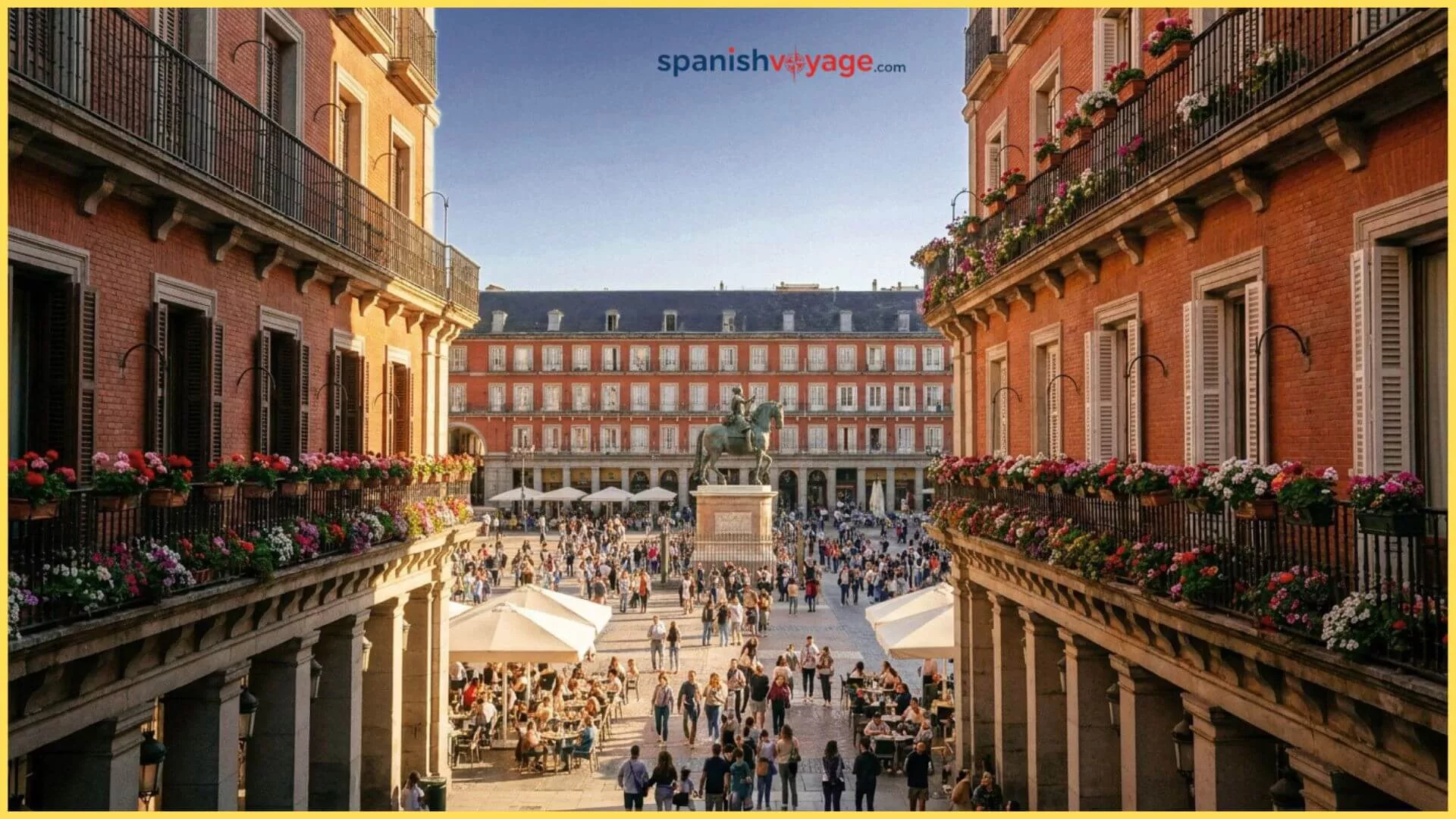
If I had to pick one window, it’d be late April through May. May’s average high is a comfortable 22.2°C, with lows around 11.3°C—perfect for long strolls through Retiro Park, wandering the Literary Quarter, or just people-watching in Plaza Mayor .
And here’s a fun bonus: mid-May is when Madrid throws its big San Isidro party, honoring the city’s patron saint with concerts, traditional dancing, and general good vibes all around town . Just pack layers, a light rain jacket, and comfy shoes—April and May do get some rain (45-50 mm), so don’t get caught off guard .
Summer: Come for the Nights, Survive the Days
Summer’s basically made for people who love late dinners, rooftop views, and a city that only really wakes up after the sun goes down. But let’s be real—July averages 32.1°C and August isn’t far behind at 31.3°C, so wandering around at 2pm is going to feel like a bad idea real quick .
My advice? Get smart about it. Hit the Prado or Reina Sofía museums during the worst heat of the day, do your outdoor sightseeing early morning before it gets brutal, and save the terraces and plazas for evening. Madrid’s Veranos de la Villa festival fills up summer nights with concerts and events, running July 7 through August 30 in 2026 . A solid summer day looks like: morning walk near the Royal Palace, museum during peak heat, chill lunch, then an outdoor concert or rooftop dinner once it cools down.
Autumn: For the Culture and Food Lovers
September and October are honestly underrated—they’re basically spring’s cooler, less crowded cousin. September still hits 26.4°C on average, dropping to a comfy 19.4°C in October. Great weather for parks, architecture walks, or just eating outside .
This season is perfect if you want a slower, culture-heavy trip: mornings at the Prado, afternoons wandering Malasaña or La Latina, evenings trying whatever seasonal Spanish dish is on the menu. Just bring a light jacket and a small umbrella—October and November tend to be the wetter months here .
Winter: Cheap, Cozy, and Christmas-y
Winter’s your pick if you’re all about museums, good food, and maybe a slightly quieter city (and saving some cash). January averages a high of 9.8°C and a low of 2.7°C, while December’s a touch warmer at 10.0°C and 3.6°C .
December especially shines with Christmas lights, holiday markets, and the whole New Year’s Eve celebration around Puerta del Sol. If you want a budget-friendly trip, January and February tend to be cheaper than the busier spring and summer months—though it’s always smart to double-check actual flight and hotel prices for your specific dates . Just bring a proper coat, layers, and closed shoes—clear winter days can actually be really pleasant for walking around.
Best Month for Each Type of Traveler
- Best overall: May, thanks to mild weather, blooming parks, and San Isidro festivities
- Best for sightseeing: April, May, September, or October—basically anytime it’s not scorching or freezing
- Best for festivals: May for San Isidro, July–August for Veranos de la Villa
- Best for saving money: January and February, when things quiet down
- Best for heat and nightlife: July and August, if you don’t mind sweating a little
- Best for Christmas magic: December, hands down
A Few Practical Tips
Madrid’s super walkable, and the Metro fills in the gaps nicely—but timing matters. In summer, save outdoor stuff for before late morning or after sunset. In winter, flip that and do your outdoor sightseeing around midday when it’s warmest.
Book your hotel early if you’re coming in May, during festival season, or around Christmas and New Year—things fill up fast. For first-timers, staying central in areas like Sol, Madrid de los Austrias, Huertas, Malasaña, or Chueca will save you loads of time getting around.
A simple game plan for pairing indoor and outdoor stops:
- Start your day outdoors at the Royal Palace or Retiro Park
- Duck into the Prado, Reina Sofía, or Thyssen-Bornemisza when it’s too hot, cold, or rainy
- Wrap up the evening in La Latina, Chueca, or Malasaña for tapas and good vibes
Quick Answers to Common Questions
What’s the best month to visit Madrid? May, pretty much across the board—mild temps around 22.2°C, gorgeous parks, and San Isidro celebrations mid-month .
When’s Madrid least crowded? January and February are your quietest bets, though August can feel emptier too since a lot of locals skip town for vacation despite the heat .
What’s the hottest month? July, no contest, averaging 32.1°C .
Is winter worth it? Absolutely, especially if museums, restaurants, and Christmas markets are your thing. Just dress warm and you’ll be fine .
How many days do I need? Three solid days cover the essentials—historic center, Royal Palace, Retiro Park, major museums. Give yourself four or five if you want to explore neighborhoods, eat your way through the city, catch a football match, or take a day trip.
Honestly, there’s no wrong time to visit Madrid—it just depends on what kind of trip you’re after. Go spring or fall for that sweet spot of nice weather and good energy, summer if you’re all about nightlife and outdoor events, or winter if festive charm and cozy museum days sound more like your vibe.