Best Places in Spain for Nature Lovers Beyond Cities
Most people think of Spain and picture sangria, beach clubs, and Sagrada Família. But here’s the thing: Spain is also one of Europe’s most biodiverse countries, with 16 national parks, over 100 natural parks, and dozens of Biosphere Reserves. That means you can go from volcanic moonscapes to misty ancient forests to flamingo-filled wetlands — all without leaving the country. Pretty wild, right?
So if you’re the kind of traveler who’d rather lace up hiking boots than queue for a museum, this one’s for you.
1. Cabo de Gata, Almería
Imagine a desert… but with turquoise water. That’s basically Cabo de Gata. It’s Europe’s only semi-arid coastal desert, and it’s got volcanic cliffs, crystal-clear coves like Mónsul and Los Genoveses, and salt flats where flamingos just casually hang out. Flamingos! In Andalusia!
It’s great for snorkeling, coastal walks, and those golden-hour photos your Instagram has been missing. Go in spring or autumn — summer gets packed, and honestly, hiking in July heat, there is no point. Base yourself in San José or Las Negras, and you’re sorted.
2. Picos de Europa
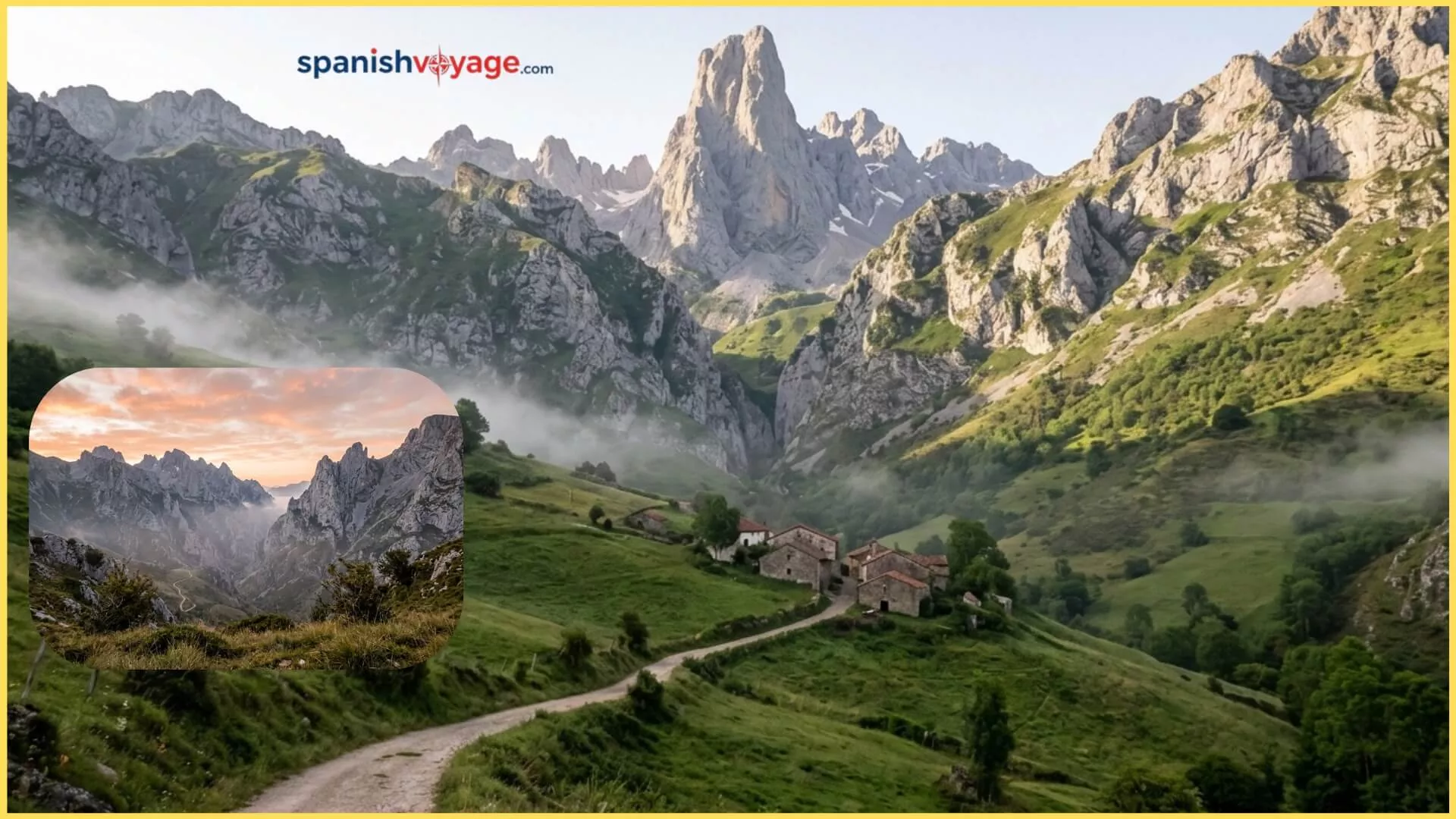
If you want proper mountain drama, Picos de Europa is your place. It spans Asturias, Cantabria, and León, with sheer limestone peaks, deep gorges, and glacial lakes that look like screensavers. It’s a UNESCO Biosphere Reserve, home to chamois and raptors, and the hiking is serious.
Best time? Late spring to early autumn, when snow clears and mountain huts open up. Cangas de Onís or Potes make solid bases. Fair warning: this isn’t a “gentle stroll” kind of park. Come prepared.
3. Ordesa & Monte Perdido, Aragón
Not as famous as the French or Catalan Pyrenees, but honestly? That works in your favor. Ordesa is Spain’s second-oldest national park (est. 1918!), and it’s got epic glacial valleys, waterfalls, and towering cliffs below Monte Perdido — the Pyrenees’ third-highest peak at 3,355m.
The valley hike along the river to the canyon viewpoints is just stunning. Trails go from family-friendly to “why did I wear these shoes”, so there’s something for everyone. Spring and summer are gorgeous — green meadows, full waterfalls, the works.
4. Doñana, Andalusia
Doñana is one of Europe’s most important wetland ecosystems, spanning Huelva, Seville, and Cádiz. Think marshes, pine forests, dunes, flamingos in huge flocks, and — if you’re very lucky — the endangered Iberian lynx. This place is a big deal for wildlife.
You can’t just wander in solo, though. Most of the core zones are restricted, so guided 4×4 safaris and birdwatching tours are the way to go. Spring and autumn are peak seasons for birds and comfortable temperatures. If you care about sustainable travel, Doñana is a must.
5. Aigüestortes, Catalonia
The only national park in Catalonia, Aigüestortes, is pure high-mountain magic — granite peaks, pine forests, clear streams, and over 200 mountain lakes. The area around Lake Sant Maurici and the twin Encantats peaks is especially photogenic.
Outside of August, it’s refreshingly quiet. You can do day hikes or multi-day circuits, spot marmots and isards (those cute mountain goats), and genuinely feel like you’ve left civilization behind. It’s a great wild contrast if you’re also visiting Barcelona.
6. Garajonay, La Gomera
Okay, this one feels like you’ve walked into a fairytale. Garajonay on La Gomera protects an ancient laurel forest — laurisilva — that used to cover much of Macaronesia millions of years ago. Mist, moss, twisted trunks, total silence. It’s stunning and slightly eerie in the best way.
It’s a UNESCO World Heritage Site, and since La Gomera has a mild climate year-round, you can visit any time. Great off-season pick if you want something different from the typical Canary Islands beach trip.
7. Sierra Nevada & Las Alpujarras, Granada
Sierra Nevada has Mulhacén, mainland Spain’s highest peak at 3,479m. In winter, it’s a ski resort; in summer, it’s wildflower meadows and big mountain hikes. But the real bonus? Flip sides to the southern slopes and you find Las Alpujarras — gorgeous whitewashed villages with terraced gardens, chestnut trees, and a very relaxed pace of life.
This combo is perfect for travelers who want both nature and culture. Hike in the morning, have lunch in a mountain village, done. You can also use it as a cool escape from Granada’s summer heat.
8. Bardenas Reales, Navarra
Most people don’t expect to find a badlands desert in northern Spain, but here it is! Bardenas Reales is all eroded clay, sandstone hoodoos, and big, dramatic skies — like something from a Western film. It’s a UNESCO Biosphere Reserve, and weirdly, it’s one of Spain’s best-kept secrets.
You can explore by car, bike, or on horseback. It’s also phenomenal for stargazing and night photography thanks to minimal light pollution. Spring and autumn are your sweet spots — summer is scorching, and after heavy winter rain, it can get pretty muddy.
9. Ebro Delta, Catalonia
The Ebro Delta is where the river meets the Mediterranean, creating a mix of rice paddies, lagoons, beaches,s and sandbars that’s home to over 300 bird species. Flamingos, herons, ducks — if it flies, it probably stops here.
The terrain is flat and quiet, making it brilliant for cycling and kayaking. Boat trips out to sandbars like Punta del Fangar are a lovely add-on. Come during spring or autumn migration, and you’ll see massive bird numbers — seriously impressive stuff.
10. Timanfaya, Lanzarote
This place looks like another planet. Timanfaya on Lanzarote was shaped by volcanic eruptions in the 1700s and 1800s, leaving behind lava fields, ash cones, es and craters with almost zero vegetation. It’s wild, alien, and absolutely unforgettable.
Access is controlled to protect the fragile terrain, so you’ll follow set routes or join coach circuits. There are even geothermal activity demos — the ground is still hot. Great for families, photographers, and anyone who loves saying “wow” a lot.
11. Monfragüe, Extremadura
If you’re into birds of prey, Monfragüe is a pilgrimage. The cliffs and dehesa (traditional oak pasture) here support the world’s largest colony of black vultures, plus black storks and Spanish imperial eagles. It’s also an Iberian lynx conservation area, though spotting one in the wild takes real luck.
Most visitors park themselves at the lookout points and watch vultures soar overhead — honestly, it’s hypnotic. Many specialist guides operate here for photographers and serious birders. It’s a slow-travel kind of destination: rural accommodation, good local food, long quiet days outside.
12. Serra de Tramuntana, Mallorca
Mallorca isn’t just resorts — the Serra de Tramuntana mountain range along the northwest coast is a UNESCO World Heritage Cultural Landscape, and it’s stunning. Terraced hillsides, stone villages, olive groves, cliffs dropping into the sea — it’s one of the Mediterranean’s most beautiful settings.
Hikers and cyclists both love it here. Routes connect villages like Deià, Valldemossa, and Sóller, with sea views at every turn. Spring and autumn are ideal — warm enough, not crowded, and the light is perfect.
At a Glance — What to Do Where
| Destination | Best Activity | Best Season | Difficulty |
|---|---|---|---|
| Cabo de Gata | Snorkeling & photography | Spring/Autumn | Easy |
| Picos de Europa | Hiking & climbing | Spring/Summer | Hard |
| Ordesa & Monte Perdido | Canyon hiking | Spring/Summer | Medium–Hard |
| Doñana | Wildlife & birdwatching | Spring/Autumn | Easy |
| Garajonay | Forest walking | Year-round | Easy |
| Bardenas Reales | Photography & stargazing | Spring/Autumn | Easy |
| Timanfaya | Volcanic exploration | Year-round | Easy |
| Serra de Tramuntana | Hiking & cycling | Spring/Autumn | Medium |
FAQs
What’s Spain’s most beautiful national park? Depends on your vibe! Picos de Europa for dramatic mountains, Timanfaya for volcanic weirdness, and Doñana for wildlife. All three regularly top Spanish park rankings.
Which part of Spain has the best nature? The north (Asturias, Cantabria, Galicia, Pyrenees) is all green mountains and rugged coasts. The south and islands give you deserts and volcanoes. Mix both for max contrast.
Is Spain good for ecotourism? Absolutely — Spain has dozens of Biosphere Reserves and a strong network of certified ecotourism experiences, especially in Extremadura, Andalusia, and the Canary Islands.
What wildlife can you see? Iberian lynx, Spanish ibex, deer, wild boar, vultures, eagles, flamingos — the list is long. Wetlands like Doñana and the Ebro Delta are especially rich in wildlife.
Best time to visit for nature? Spring and autumn for most spots — mild temps, fewer crowds, active wildlife. Garajonay and Timanfaya are comfortable all year round thanks to the Canary Islands’ climate.