Quiet Beach Towns in Spain for a Relaxing Summer
Spain is one of those places people just keep coming back to in summer, and honestly, it’s easy to see why. You’ve got clear blue water, long sandy beaches, amazing food, and sunshine that rarely seems to quit. Sounds perfect… until you end up squeezed onto a beach in Barcelona, Ibiza, or Málaga with about 4,000 other people also chasing the “perfect relaxing holiday.”
The good news? Spain has more than 8,000 kilometers of coastline, so if you know where to look, you can still find beach towns that feel calm, beautiful, and actually relaxing. The kind of places where you hear waves instead of nightclub speakers.
Why pick a quiet beach town?
Choosing a smaller beach town in Spain isn’t just about dodging crowds. It’s about getting a totally different kind of trip.
In these quieter places, life moves more slowly. Mornings are for coffee at a local café, not fighting for the last beach umbrella. The food usually feels more real, too, because you’re eating in family-run restaurants instead of tourist traps with laminated menus in 7 languages. Prices are often better, which is always nice, and the beaches tend to be cleaner, calmer, and a lot less chaotic.
Basically, it’s Spain with the volume turned down.
Best quiet beach towns in Spain
Cadaqués, Catalonia
Cadaqués feels like a reward for making the trip. It sits at the end of a winding mountain road on the Costa Brava, so you don’t just accidentally end up there. That’s part of the charm.
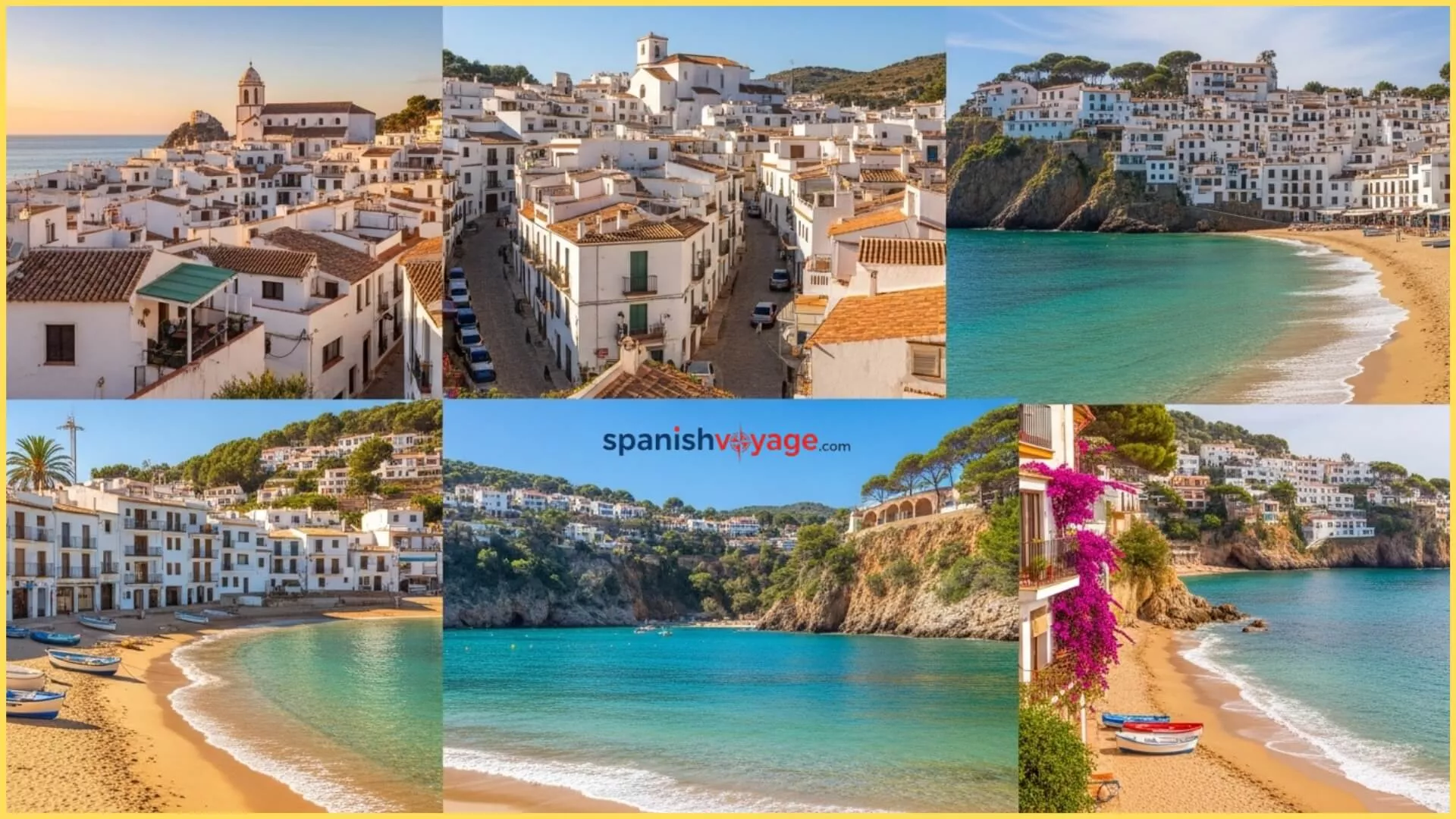
The town is full of whitewashed houses spilling down toward a pretty,y curved bay, and the whole place has a slightly artsy, dreamy feel. Salvador Dalí lived nearby for years, and you can still sense that creative energy in the air. Around town, Cap de Creus Natural Park is packed with hidden coves that you can reach on foot or by boat.
It’s a great pick for couples, artists, or anyone who wants somewhere beautiful without the madness of a big resort.
Combarro, Galicia
Combarro is one of those places that feels almost too photogenic to be real. It’s a small fishing village on the Ría de Pontevedra, and its waterfront is lined with famous stone granaries called hórreos. Add cobbled streets, old chapels, and seafood restaurants right by the water, and yeah..It’s pretty special.
Nearby beaches like Praia de Lourido are calm, clean, and usually much quieter than Spain’s better-known coastal spots. Galicia’s green landscape gives the whole area a peaceful, slightly moody beauty that feels very different from the Mediterranean.
If you like seaside villages with loads of character, Combarro is an easy yes.
El Palmar, Andalucía
If your ideal beach town is simple, laid-back, and a little bit surfy, El Palmar is a solid choice. It sits south of Cádiz on a long Atlantic beach that seems to go on forever.
This isn’t a place you visit for fancy architecture or polished resort vibes. You come here to slow down. Think surf schools, casual beach bars, barefoot afternoons, and sunsets that make everyone stop talking for a minute. It’s the kind of place where one drink turns into “let’s just stay for dinner too.”
Perfect if you want to unplug, try surfing, and eat fresh fish by the sea.
Llanes, Asturias
Llanes is for people who love dramatic scenery more than postcard-perfect palm trees. This northern town in Asturias is stunning in a completely different way. Green cliffs, wild beaches, and cooler air make it feel fresh even in the middle of summer.
One of the most striking beaches nearby is Torimbia, a natural nudist beach hidden behind a hill. Even if that’s not your thing, the setting is gorgeous. In town, you’ve got a lovely medieval harbor, old walls, and plenty of Asturian cider culture to enjoy.
It’s especially good if you want a beach holiday without the intense southern heat. Not everyone wants to melt by 2 PM.
Peñíscola, Valencia Region
Peñíscola has one of the coolest settings of any beach town in Spain. It sits on a rocky headland that juts into the Mediterranean, and right on top is a medieval castle that once sheltered Antipope Benedict XIII. So yes, there’s a lot more going on here than just sunbathing.
The old town inside the walls feels genuinely historic, and even though Peñíscola is well-known, it’s still usually more manageable than nearby resort-heavy spots like Benicàssim. The beaches around the base of the rock are long, sandy, and well looked after, and the town has enough restaurants and local life to feel lively without becoming exhausting.
It works really well for families, couples, and anyone who wants beach time with a bit of history thrown in.
Zahara de los Atunes, Andalucía
Zahara de los Atunes is one of the most peaceful beach towns on the Costa de la Luz, and honestly, it’s hard not to love it. The beach is wide, open, and often surprisingly empty, even in summer. There’s space to breathe, which feels rare these days.
The town is best known for its bluefin tuna, and if you like seafood, this place is a dream. A long beach walk, grilled atún rojo, a cold glass of local wine, and a slow evening by the sea? That’s basically the vibe here.
If your idea of a perfect holiday is doing very little, very well, Zahara is a winner.
When to go for fewer crowds
Timing matters a lot if you want the peaceful version of Spain.
May and June are probably the sweet spot. The weather is warm, the days are long, and in the south, you can usually already swim comfortably. September is also fantastic, maybe even better for some people, because the sea is at its warmest and the crowds start to thin out after mid-August.
July and August are peak season, no way around it. If that’s when you have to travel, try to arrive mid-week and book your stay well in advance.
Also, keep in mind that Spain’s coast isn’t all the same. Asturias and Galicia are cooler and wetter than Andalusia or Catalonia, so don’t pack as if the whole country is one giant sunbed.
Tips for planning a quiet beach trip
A few simple tips can make the difference between “what a peaceful escape” and “why is everyone else here too?”
Book early. Even lesser-known towns get busy in summer, especially the nicest small hotels and apartments.
Rent a car. Public transport can be limited in rural coastal areas, and having a car makes it much easier to reach hidden coves and nearby villages.
Get out early. Even a place like Cadaqués feels almost magical before 9 AM.
Respect local communities. Some smaller towns are feeling the pressure of tourism, so it helps to shop local, follow beach rules, and leave as little a trace as possible.
Learn a few words of Spanish. In smaller places, English isn’t always common, and locals may also speak regional languages like Catalan or Galician.
Where to stay
One of the nice things about these quieter beach towns is that the accommodation often has more charm than the usual big hotel blocks.
Boutique hotels are a great option in places like Cadaqués, Llanes, and Peñíscola, where old buildings have often been turned into stylish little hotels with loads of character. Beachfront apartments are ideal if you’re traveling with family or staying longer, since you get more space, a kitchen, and easy beach access. In Asturias and Galicia, casas rurales are also a great choice. These family-run guesthouses are usually in the countryside but still within driving distance of the coast, and they give you a more local, authentic experience.
What to eat along the coast
One of the best parts of visiting quieter beach towns in Spain is the food. It often feels better, more local, and less watered down for tourism.
In Galicia, try pulpo a la gallega, percebes, and a glass of Albariño. In Asturias, go for fresh anchovies, fabada asturiana, and of course sidra. In Andalusia, you can’t go wrong with pescaíto frito, grilled atún rojo, and a chilled manzanilla from Sanlúcar de Barrameda. In Catalonia and Valencia, look out for fideuà, sea urchin, and pa amb tomàquet.
And wherever you go, ask for the menú del día. It’s usually a fixed-price lunch with 3 courses, often including wine, for around €12–€16. It’s one of the best-value meals you’ll find in Spain, and honestly, sometimes it ends up being the best food of the whole trip.
FAQs
What is the least crowded beach town in Spain?
Zahara de los Atunes and Combarro are usually among the least crowded coastal spots in Spain, even during summer. Towns in Asturias and Galicia also tend to see far fewer international tourists than the big Mediterranean resorts.
Are quiet beach towns in Spain good for families?
Yes, absolutely. Peñíscola and Llanes are especially family-friendly. They have a relaxed pace, safe-feeling streets, and beaches that are much easier to enjoy with kids than the usual busy resort scene.
Are these hidden coastal towns expensive?
Usually not. In general, staying and eating in lesser-known towns can cost around 30–50% less than in places like Barcelona, Ibiza, or Marbella. The main exception is August weekends in trendy spots like Cadaqués, where prices can jump fast.
Which part of Spain has the most peaceful beaches?
Galicia and Asturias are probably the most consistently tranquil regions for beaches, mostly because they’re cooler and a bit farther from Spain’s busiest tourist routes. If you want warmer water but still want some peace, the Costa de la Luz in Cádiz province is one of the best options.
If you’re dreaming of a summer in Spain that feels calm, local, and genuinely restful, these towns are a much better bet than the usual headline destinations. Less noise, better food, prettier mornings, and way fewer inflatable flamingos floating past you in the sea. Hard to argue with that.