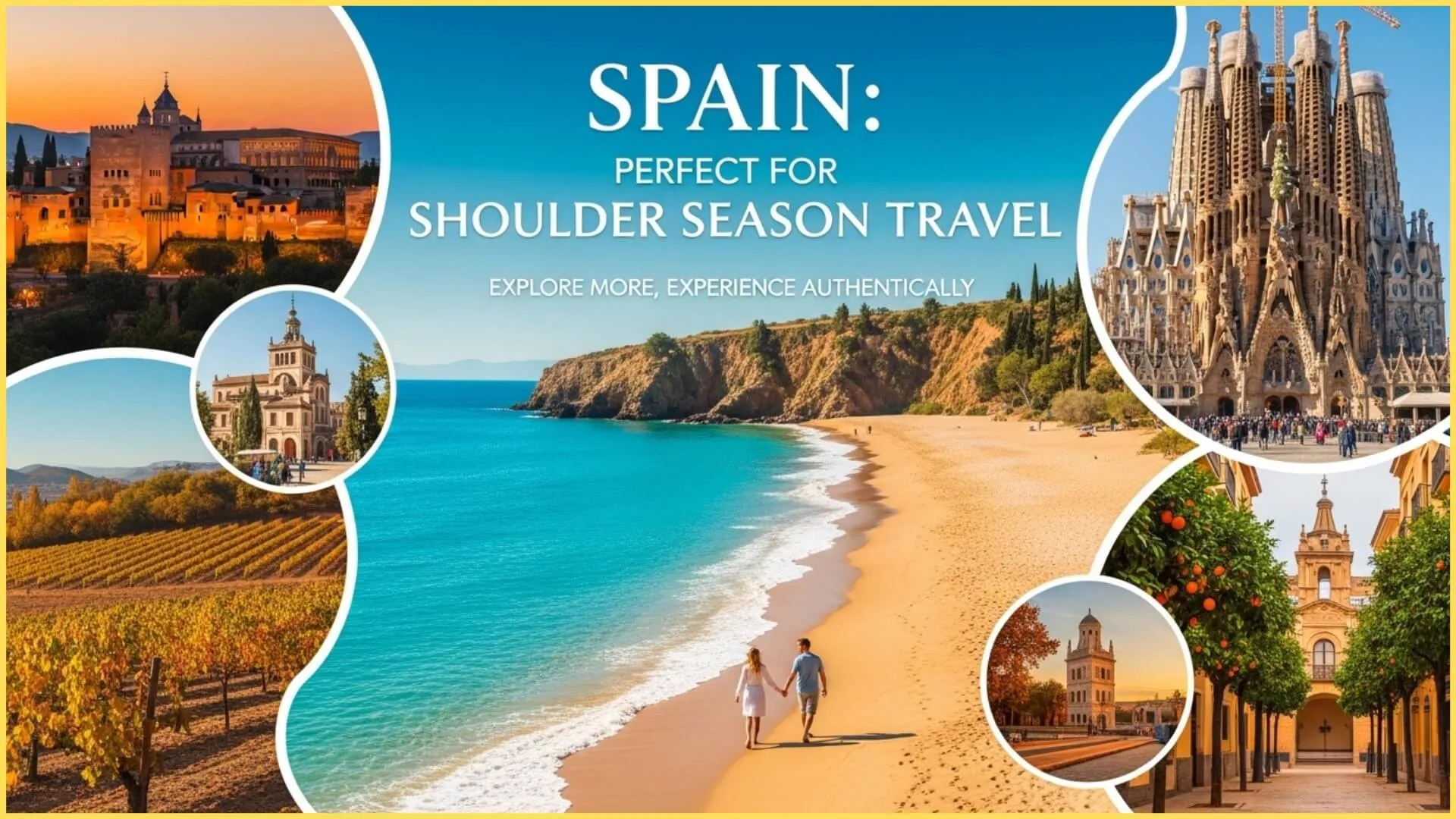
Spain Destinations Perfect for Shoulder Season Travel
Spain is one of those places that gets even better when you don’t visit in the middle of summer.
If you go during shoulder season — basically spring and early autumn — you get the sweet spot: warm weather, fewer crowds, less stress, and a much nicer pace overall. No melting in 40∘C heat, no fighting for space on the beach, and no giant queues draining your holiday mood before lunch.
If you’re into beaches, beautiful old cities, Moorish history, or just eating ridiculously well, Spain has a shoulder-season destination that fits.
Why shoulder season is such a good idea
In Spain, shoulder season usually means March to June and September to October. The best months are often April to May and September to October, when a lot of the country sits in that very comfortable 15–25∘C range.
That means you can actually enjoy walking around a city without feeling roasted, but still get enough sunshine for beach time. Honestly, it’s the best of both worlds.
Here’s why travelers love Spain in shoulder season:
Fewer crowds at famous landmarks and beaches, so sightseeing feels calmer.
Milder temperatures for walking tours, day trips, and outdoor exploring.
Easier restaurant bookings in food cities like San Sebastián.
A better mix of beach weather and city time in places like Valencia and Castellón.
Lower hotel prices in many coastal and island areas compared with peak summer.
Best places to visit in Spain in the shoulder season
Valencia
Valencia is one of the easiest places to recommend if you want a bit of everything. You’ve got city life, beach time, amazing food, and striking architecture all in one place.
Shoulder season is when Valencia really feels good. The City of Arts and Sciences is easier to enjoy without the summer heat, the Old Town is much more pleasant for wandering, and the Turia Gardens are perfect for a bike ride when you’re not sweating through your T-shirt. Spring and autumn temperatures usually stay in the low 20∘Cs, so it’s warm enough for the beach but still comfortable for long walks.
Best for: travelers who want city, beach, food, and architecture in one trip.
Seville
Seville in shoulder season? Great idea. Seville in peak summer? Let’s just say your water bottle will become your best friend.
Spring and autumn are when the city really shines. In spring, the orange blossoms make the whole place smell amazing. In autumn, the soft golden light makes everything look extra beautiful, especially if you like photography. Big sights like the Real Alcázar and Plaza de España are much easier to enjoy when you’re not dealing with brutal heat and massive lines. And catching a flamenco show in Triana feels a lot more special when the city isn’t packed wall-to-wall.
Best for: culture lovers, architecture fans, and first-time visitors to Spain.
San Sebastián
If your travel plans revolve around food — and honestly, fair enough — San Sebastián is a fantastic shoulder-season choice.
This city is famous for its pintxos bars, fresh Basque seafood, and Michelin-starred restaurants. Outside of July and August, it becomes much easier to get a table at places people dream about for months. Spring and late September are especially good, because you can still enjoy La Concha beach and the elegant seaside atmosphere without the heavy summer crowds. It’s a lovely pick for couples, foodies, or anyone who believes holidays should come with at least three great meals a day.
Best for: gastronomy, stylish coastal getaways, and couples.
Córdoba
Córdoba is one of those places that deserves calm weather. Its star attraction, the Mezquita, is one of the world’s most impressive examples of Islamic architecture, and it’s much easier to appreciate when you’re not baking in the heat or standing in a huge queue.
In spring and autumn, the city is ideal for walking through the historic center, the old Jewish Quarter, and the little streets around the medina. If you visit in May, the patios filled with flowers are a huge bonus. Córdoba works especially well as a short cultural break for travelers who love history and architecture.
Best for: history lovers, Moorish heritage, and shorter cultural trips.
Ronda
Ronda is dramatic in the best possible way. The gorge is huge, the Puente Nuevo bridge is iconic, and the whitewashed streets are ridiculously photogenic.
Spring and autumn make the whole area even better because the light is softer, the countryside looks greener, and the nearby Sierra de Grazalema and Pueblos Blancos are much nicer for exploring on foot. In the hotter months, that landscape can feel dry and intense, but in shoulder season it’s far more inviting. If you’re planning an Andalucía road trip, Ronda is a brilliant stop.
Best for: romantic getaways, photography, and scenic road trips.
Almería
If you want sunshine without the big resort chaos, Almería is a smart pick.
It’s one of the warmest and driest cities in Spain, so even shoulder season can feel beautifully sunny. Spring and autumn bring comfortable temperatures and low humidity, which is ideal if you want beach time without midsummer intensity. Places like Playa de los Genoveses and Cabo de Gata are especially appealing when they’re not packed. Almería is great for travelers who still want proper coast-and-sun vibes, just in a quieter way.
Best for: sun seekers and peaceful coastal holidays.
Zaragoza
Zaragoza doesn’t always get the attention it deserves, which is exactly part of the appeal.
It has wide plazas, Roman ruins, major baroque landmarks, and a relaxed local feel that makes it a great alternative to Spain’s more obvious city breaks. In shoulder season, the temperatures are warm enough for long walks but not exhausting. You can take your time at the Basílica del Pilar or explore the Aljafería Palace without feeling swept along by tourist crowds.
Best for: underrated city breaks and travelers who want culture without the usual crowds.
Castellón de la Plana
Castellón de la Plana is a really good option if you want a Mediterranean base that feels quieter and more local.
It sits north of Valencia and often gets overlooked, which works out nicely for anyone trying to avoid the busier coastal hotspots. In spring and early autumn, beaches like Playa del Pinar are much calmer than places like Benidorm, and there are also outdoor options nearby, including hiking and natural spaces like Desert de les Palmes. It’s ideal if you want sea, sunshine, and a slower pace.
Best for: travelers looking for a quieter Mediterranean escape.
Best places by travel style
If you’re not sure where to go, here’s the quick version:
- City + beach: Valencia.
- Food trip: San Sebastián.
- Culture + monuments: Seville, Córdoba, Zaragoza.
- Scenic small-town escape: Ronda.
- Warm coastal weather: Almería, Castellón de la Plana.
Spring or autumn?
Both are great, but they work a bit differently.
Spring is especially good for Andalucía. Cities like Seville, Córdoba, and Ronda feel lively, fresh, and full of color. You also get festival season, including Semana Santa and Seville’s April Fair, which adds a lot to the experience.
Autumn is often better for beach-and-city trips, especially along the Mediterranean. The sea stays warm well into September and October, so if swimming matters to you, autumn wins.
Best places for spring
- Seville.
- Córdoba.
- Ronda.
- Pueblos Blancos de Cádiz.
Best places for autumn
- Valencia.
- Castellón de la Plana.
- San Sebastián.
- Almería.
Autumn in Andalucía also brings wine harvest season, so if you’re around between September and November, you might catch local tastings and traditional celebrations too.
Tips for planning your trip
Spain’s shoulder season is great, but each region behaves a little differently, so it helps to plan around what matters most to you.
Check festival dates. Semana Santa and Seville’s April Fair can send hotel prices up fast, even outside summer.
Pack layers for the north. San Sebastián can be cooler and wetter in spring, so a light waterproof jacket is a good idea.
Travel midweek if you can. Popular sights like the Alhambra and the Mezquita still get busy on weekends.
Book restaurants early in food cities. San Sebastián may be quieter than in summer, but the best spots still fill up.
For swimming, aim for late September or October. Mediterranean sea temperatures are usually better than.
FAQ
What is shoulder season in Spain?
It’s the period just outside peak summer, usually March to June and September to October, when the weather is still pleasant but crowds and prices are generally lower.
Is Spain worth visiting in spring or autumn?
Definitely. In fact, a lot of people would say spring and early autumn are the best times to go. You get nice weather, fewer people, and a more relaxed experience overall.
Which part of Spain has the best weather in the shoulder season?
Southern Spain and the eastern Mediterranean coast usually come out on top. Places like Seville, Almería, and Valencia often stay in the 17–24∘C range, with plenty of sunshine.
Where can I avoid crowds in Spain?
Zaragoza, Castellón de la Plana, Almería, and Ronda are all good choices if you want somewhere less busy than Barcelona, Madrid, or Granada.
Is Valencia or Seville better in shoulder season?
Both are excellent, but for different kinds of trips. Valencia is better if you want a beach-and-city combo, and it works really well in both spring and autumn. Seville is at its best in spring, when the weather is still manageable and festival season is in full swing. In summer, Seville can hit 40∘C, which is… character building.