Spain Culture Shock:10 Surprises You Probably Won’t See Coming
You’ve seen the dreamy photos. You’ve watched the TikToks. Maybe you’ve even practiced saying hola and gracias in the mirror.
So when you finally get to Spain, you expect it to feel exciting, sunny, and kind of easy.
And then… dinner doesn’t start until what feels like the middle of the night. Shops disappear for hours in the afternoon. And somehow the streets are still full of people at midnight on a random Tuesday.
Yep — welcome to culture shock, Spain-style.
The good news? It’s not a bad thing at all. It just means the usual “rules” you’re used to don’t quite work here. Spain has its own rhythm, and once you stop fighting it, you start to enjoy it. Honestly, that’s when the magic kicks in.
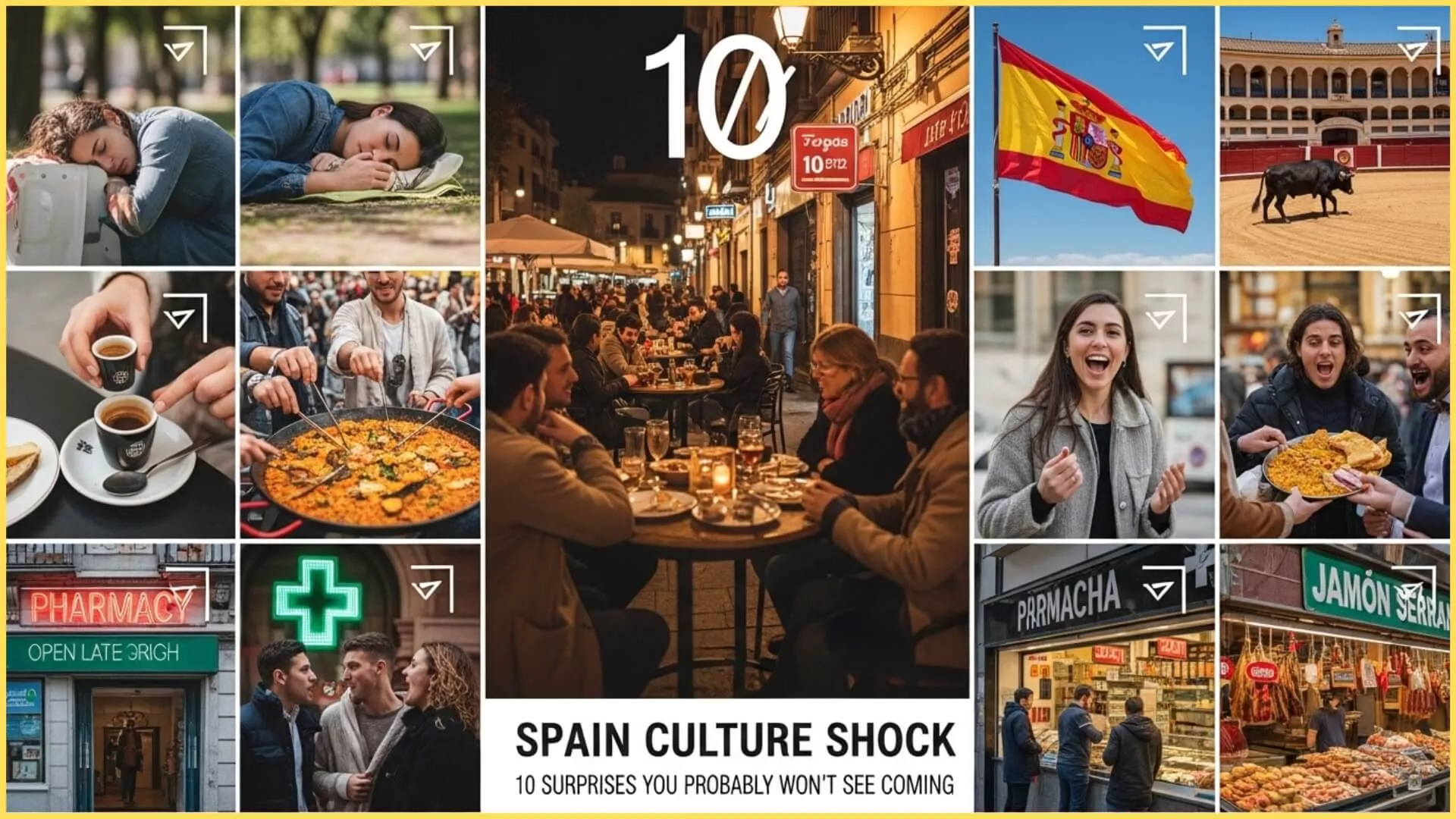
Here are 10 things that might surprise you in Spain — and how to deal with them without losing your mind.
1. Dinner Is Seriously Late
If you go looking for dinner at 6 PM, you may find yourself sitting alone with a bread basket and your own confusion.
In Spain, lunch is usually the big meal of the day, and people often eat it between 2 and 4 PM. Dinner? That usually starts around 9 or 10 PM, and even later on weekends.
At first, it feels wild. But once you get used to it, it kind of makes sense. People work in the morning, slow down in the afternoon, then head back out in the evening and make a whole event out of dinner.
My advice: don’t try to force your normal routine on day one. Have a snack in the early evening if you get hungry, then ease into the local schedule.
2. The Siesta Is Real… Sort Of
Yes, the famous siesta exists — but maybe not in the way you imagine.
These days, it’s usually less about everyone going home for a nap and more about a midday pause. In many places, especially smaller towns, local shops and family-run businesses close from around 2 to 5 PM.
So if you suddenly need a pharmacy, a hardware store, or some random thing in the middle of the afternoon, good luck.
Big supermarkets and shops in touristy areas often stay open, but smaller local places may not. Best move? Do your errands in the morning or later in the day. And if everything’s closed, just do as the locals do: have a long lunch and relax a bit.
3. People Are Loud — But in a Fun Way
One thing that surprises a lot of visitors is how loud Spain can feel.
People talk with energy. They interrupt each other. They laugh loudly. Bars, cafés, and plazas can sound like everyone is having three conversations at once.
But here’s the thing: loud doesn’t mean angry. In Spain, it often just means people are engaged, excited, and enjoying themselves.
So if a table next to you sounds like it’s about to break into an argument, there’s a decent chance they’re just discussing where to go for the next drink.
4. Personal Space Works Differently
If you’re used to lots of personal space, Spain may feel a little close-up at first.
People often stand closer when talking, and greetings can be more physical than you expect. A common greeting is two cheek kisses, especially between women or between a man and a woman who are being introduced socially. Men usually shake hands with each other.
If this catches you off guard, don’t panic. Just follow the other person’s lead. It can feel awkward the first time, but you get used to it pretty fast.
5. Social Time Is Flexible
Ah, yes, “Spanish time.”
If someone invites you to a casual dinner or party at 8 PM, that does not always mean everyone will actually be there at 8 PM. In social situations, showing up a little later is often totally normal. Sometimes, 30 minutes later. Sometimes more.
But don’t take that to mean all timing is loose. Work meetings, doctor’s appointments, interviews, and anything official usually run on time.
So the rule is simple: social plans are flexible, professional plans are not.
6. Tipping Is Pretty Chill
If you’re coming from the US, this one may feel strange.
In Spain, tipping is not a big deal in the same way. It’s not expected every single time, and no one is silently judging you over the receipt.
At a café or tapas bar, leaving some small change or rounding up is totally fine. In a nicer restaurant, or if the service was especially good, around 5 to 10% is a kind gesture. But there’s no pressure to tip heavily.
So relax — this is not a “calculate 20% while stressed” situation.
7. Sundays Can Feel Super Quiet
Sunday in Spain has a very different vibe.
A lot of shops are closed, and many areas feel slower and calmer. If you were planning to do a big grocery run or spend the afternoon shopping, that may not work out too well.
Restaurants, bars, museums, and tourist attractions are often still open, so it’s not like the whole country shuts down. But Sundays are still more about family, long meals, walks, and taking it easy.
Honestly, it can be kind of lovely.
8. Tapas Are Not Just Food
Tapas are a whole social event.
Yes, they’re delicious. But more importantly, they’re part of how people spend time together. In some places — like Granada, Salamanca, and parts of Andalusia — you may still get a small tapa free with your drink. In many other parts of Spain, you order different small dishes and share them with the table.
That’s the key part: sharing.
This isn’t usually a “one person, one plate, finish fast, move on” kind of meal. It’s more like ordering a few things, talking a lot, maybe moving on to another bar, and stretching the whole thing out for a while. This bar-hopping style is often called ir de tapas or tapeo.
Basically, tapas are less about eating quickly and more about hanging out.
9. People Dress Better Than You Might Expect
Spain is one of those places where people often look effortlessly put together without seeming like they tried too hard.
Even casual outfits usually feel neat and stylish. You won’t often see locals walking around the city in beachwear, flip-flops, or gym clothes unless they’re actually at the beach or going to the gym.
No, no one expects tourists to show up looking like they walked out of a fashion campaign. But if you want to feel a bit more in sync, it helps to dress slightly smarter than you might for a beach town elsewhere.
In short: save the “I just rolled out of bed and found sandals” look for another day.
10. Spain Is Not Just One Thing
This is a big one.
A lot of visitors talk about “Spanish culture” as if it’s one single experience. But Spain is incredibly diverse, and each region has its own feel.
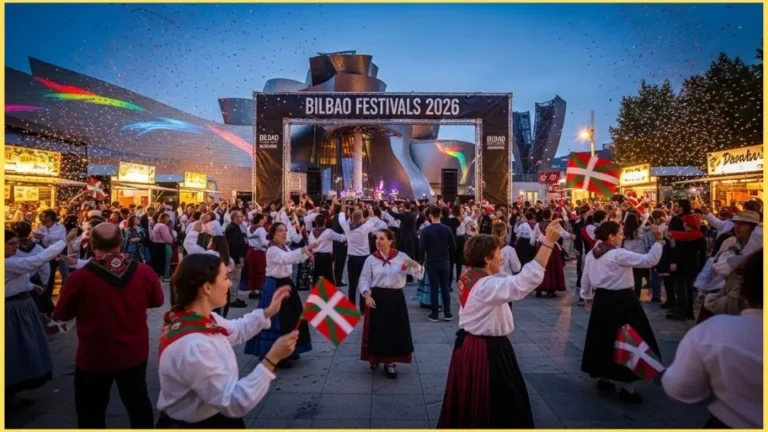
Catalonia has Catalan and a strong identity of its own. The Basque Country has Euskera and a very distinct culture. Galicia, Andalusia, and Valencia — they all bring different traditions, food, festivals, architecture, and local personality.
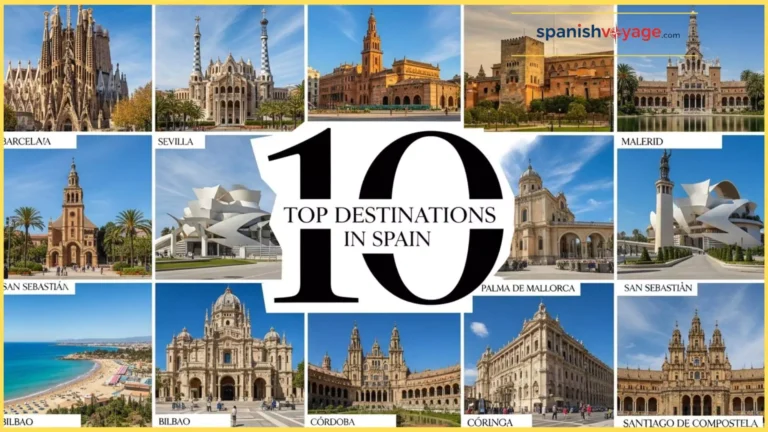
So if your first trip is to Barcelona, that doesn’t mean you’ve “done Spain.” A few days in Seville or San Sebastián can feel like a completely different world.
That’s part of what makes the country so interesting.
How to Adjust Faster in Spain
Settling into Spanish life gets much easier when you stop comparing everything to home every five minutes.
A few simple tips can help:
Learn a few basic Spanish phrases. Even simple greetings go a long way, and people appreciate the effort.
Shift your routine a little. Eating and sleeping later helps you sync with local life.
Watch what locals do. If something feels confusing, observe first and copy later.
Don’t rush everything. Spain moves at its own pace, and that’s part of the charm.
Go beyond the tourist zones. Neighborhood bars, local markets, and smaller towns often give you the most real and memorable experiences.
Common Tourist Mistakes in Spain
A few things trip people up again and again:
Trying to eat dinner before 8:30 PM and wondering why every restaurant is empty.
Expecting small shops to be open during siesta hours.
Acting like regional differences are tiny or unimportant.
Tipping too much out of habit.
Treating meals like something to finish quickly instead of something to enjoy slowly.
None of these are disasters, of course. But knowing them in advance makes the whole trip smoother.
Culture shock in Spain usually isn’t dramatic. It’s more like a series of little surprises that make you stop and go, “Wait… what?”
But that’s also the fun of it.
Spain invites you to slow down, eat later, stay out longer, talk more, and stress less. Once you lean into that rhythm, the things that seemed strange at first often become the exact things you end up loving most.
Don’t fight it too hard. Give it a couple of days. There’s a very good chance you’ll leave wondering why the rest of the world doesn’t do things this way.
FAQ
Is culture shock common in Spain?
Yes, especially for visitors from North America or Northern Europe. The biggest surprises are usually the late meal times, the afternoon slowdown, and the more expressive social style.
What is the biggest culture shock in Spain?
For most travelers, it’s the daily schedule. Lunch is late, dinner is even later, and the whole day runs differently from what many visitors expect.
How can I avoid culture shock in Spain?
You probably won’t avoid it completely, but you can make it easier. Learn a bit before your trip, stay flexible, and treat the differences as part of the experience instead of a problem.