
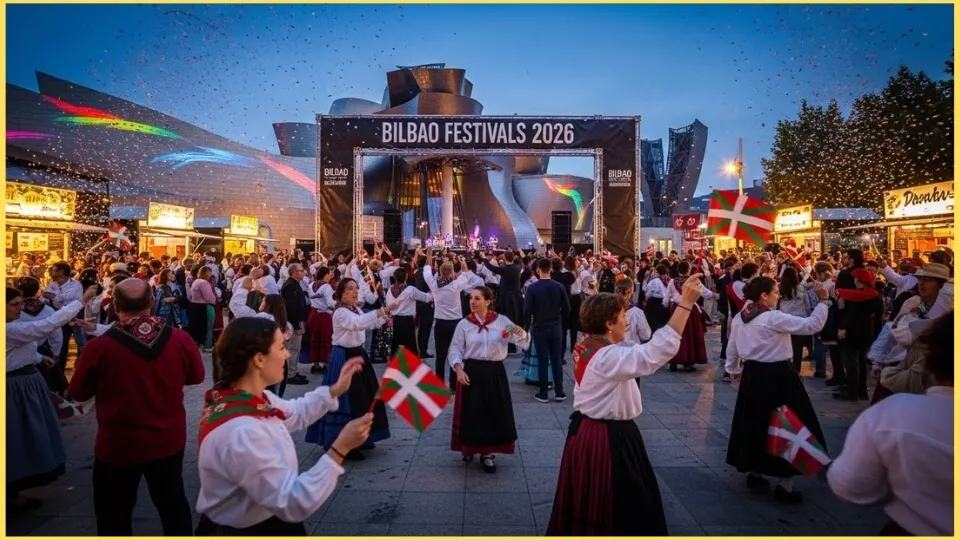
Bilbao Festivals 2026: A Month-by-Month to Basque Celebrations
Look, if you think Spain is all about flamenco and bullfighting, Bilbao’s about to blow your mind. This Basque city doesn’t just do festivals—it lives them. And honestly? The Basques take their celebrations more seriously than anyone I’ve encountered.
What makes Bilbao festivals different from, say, Madrid or Barcelona? Well, the Basque identity runs deep here. You’ll hear Euskara (the Basque language) mixed with Spanish, taste flavors you won’t find anywhere else, and witness traditions that have survived for centuries. Plus, the locals actually participate—this isn’t just tourist entertainment. When Bilbao throws a party, everyone shows up.
Expect amazing food (because the Basque Country = food heaven), traditional music that’ll get stuck in your head, and a genuine warmth that makes you feel like you’ve stumbled into one massive family gathering. Let’s break down what’s happening month by month.
January – Starting the Year Basque-Style
New Year’s Day here is pretty chill—mostly family time and recovering from the night before. But wait until January 5th rolls around. The Three Kings Parade (Cabalgata de Reyes) is where the magic happens. Kids go absolutely bonkers for this one, and honestly, it’s way cooler than what most countries do for Christmas.
The kings arrive by boat (because Bilbao’s got that river), throw candy to the crowds, and the whole city turns out to watch. If you’ve got little ones, this is their Super Bowl. The atmosphere is pure joy, and you’ll see families bundled up against the cold, faces lit up like it’s the best night of the year.
January’s also when locals embrace indoor culture—concerts, exhibitions, cozy pintxo bars. The weather’s not exactly beach-friendly, but the cultural scene makes up for it.
February – Carnival Madness
Bilbao Carnival (called Aratusteak in Basque) usually happens in late February, depending on when Easter falls. It’s not Rio-level insane, but it’s got its own quirky charm. Think colorful parades, creative costumes, and street parties that get pretty wild.
What’s cool is how it blends urban vibes with rural Basque traditions. You’ll see modern music alongside ancient folk elements. The neighborhoods compete to throw the best parties, and honestly? Just pick a spot and go with the flow.
It’s super family-friendly during the day—kids in costumes everywhere—but the nights? That’s when things get interesting for the adults. Pro tip: dress up, or you’ll feel left out.
March – Culture Comes Alive
Spring starts waking up the city, and with it comes the Loraldia Festival, celebrating contemporary Basque culture. If you’re into theatre, music, or literature with a modern Basque twist, this is your jam.
March is when Bilbao shakes off winter, and people start filling the outdoor terraces again. The weather’s getting nicer (well, less rainy), and there’s this energy of anticipation in the air. Cultural events pop up across the city, and you can feel the momentum building toward summer.
April – Holy Week Traditions
Semana Santa (Holy Week) in Bilbao is more subdued than in Andalusia—no massive processions with hundreds of people carrying statues through streets at 3 am.
The processions here are intimate, mostly focused on the old quarter (Casco Viejo). Churches hold special services, and families gather for traditional Easter meals. The folk like during this time? Chef’s kiss. We’re talking torrijas (Spanish French toast) and other treats that make you question your life choices when you can’t stop eating them.
It’s a good time to visit if you want to see a more spiritual, traditional side of Bilbao without massive tourist crowds.
May – Neighborhood Vibes
May’s when the neighborhoods really start their own thing. You’ll stumble upon local fiestas that aren’t even in tourist guides—just communities celebrating because it’s May and w not?
Basque folk dancing pops up everywhere, outdoor concerts multiply, and markets start spreading through plazas. The weather’s finally cooperating (usually), so everyone’s outside soaking up that Basque sunshine (which, let’s be honest, is precious).
This month is perfect for wandering around and discovering authentic local celebrations. No massive crowds, just genuine neighborhood spirit.
June – Music and Pride Take Over
Late June is when Bilbao BBK Live usually kicks off (though main dates are in July). Music fans, this is your moment. But before we get there, June also brings Bilbao Pride (Bilbao Bizkaia Harro), and let me tell you—this city knows how to celebrate diversity.
The Pride parade is colorful, loud, and inclusive. The Basque Country has always been pretty progressive, and this event shows it. Street parties, concerts, and a general vibe of acceptance and celebration fill the city.
As summer officially arrives, outdoor nightlife explodes. Terraces stay open late, street musicians are everywhere, and the whole city feels alive.
July – BBK Live Dominates
Okay, here’s the big one for music lovers. Bilbao BBK Live is basically the Basque Country’s answer to Coachella (but cooler, obviously—I’m biased). International artists, multiple stages, and thousands of people descending on Kobetamendi for three days of pure musical chaos.
Even if you’re not at the festival, the energy spreads through the entire city. Pop-up concerts happen downtown, bars and clubs extend their hours, and everyone’s either coming from or going to BBK Live.
Book accommodation well in advance if you’re planning to attend. Hotels fill up faster than pintxo bars at happy hour.
August – Aste Nagusia is Everything
Alright, we need to talk about Aste Nagusia (Big Week). This is THE festival. The crown jewel. The reason people plan their entire year around visiting Bilbao.
For nine days in mid-August, the city loses its mind in the best possible way. It started back in 1978, and now it’s basically Bilbao’s identity in festival form. We’re talking 1.5 million people attending events throughout the week.
The Marijaia doll becomes the city’s mascot—this cheerful, raised-arm figure appears everywhere. Fireworks light up the sky every night (and I mean seriously impressive displays). Street theatre, concerts, traditional Basque sports, food stalls, and comparsas (community groups) parade through the streets.
What makes it special? It’s not commercialized tourist stuff. Locals genuinely celebrate their city and culture. You’ll see grandmothers dancing in the streets alongside teenagers, entire families camping out for good fireworks spots, and a sense of pure joy that’s impossible to fake.
The atmosphere shifts between wild party mode at night and family-friendly celebration during the day. You can literally do whatever vibe you want—there’s something for everyone.
Fair warning: it gets crowded. Like, really crowded. But that’s part of the magic.
September – Food and Traditional Sports
After August’s intensity, September brings things back down to earth with Basque rural sports exhibitions. Ever seen people lifting massive stones or chopping through tree trunks at superhuman speed? No? Well, now’s your chance.
These traditional sports (called herri kirolak) are weirdly mesmerizing. They’re not just entertainment—they’re cultural heritage. Watching burly Basques compete in these ancient tests of strength makes you appreciate how these traditions have survived.
Food fairs and wine tastings also pop up everywhere. September’s harvest time, so markets overflow with local produce, txakoli (Basque white wine), and seasonal specialties.
October – Film and Arts Scene
Zinebi, Bilbao’s International Documentary and Short Film Festival, takes center stage in October. It’s been running since 1959, making it one of Europe’s oldest documentary festivals.
Even if you’re not a hardcore film buff, the atmosphere during Zinebi is pretty cool. The weather’s turning crisp and autumnal (perfect cinema weather), and the city’s cultural venues come alive with screenings, discussions, and artistic events.
Literary festivals and art exhibitions multiply too. October’s when Bilbao shows its intellectual, contemplative side.
November – Underground Culture
November gets a bit gray and rainy (not gonna lie), but the cultural scene goes underground in the coolest way. Modern music venues host experimental stuff, art galleries showcase emerging artists, and university-focused events bring fresh energy.
This is when you discover Bilbao’s gastronomic societies—private cooking clubs that are huge in Basque culture. While tourists can’t just walk in, some open their doors for special events in November. If you get an invite, go. The food and camaraderie are unreal.
December – Christmas Basque-Style
Bilbao Christmas markets transform the city center into a festive wonderland. Plaza Nueva fills with stalls selling crafts, seasonal treats, and gifts. The lights? Spectacular. The Basques don’t mess around with holiday decorations.
Traditional Basque Christmas customs mix with modern celebrations. You’ll find nativity scenes (belenes) everywhere, special foods like turrón and polvorones, and a general warmth that makes the cold, rainy weather bearable.
The markets usually run from late November through early January, peaking around Christmas and New Year’s. It’s touristy, sure, but locals love it too.
Making the Most of Bilbao Festivals in 2026
Timing matters. If you want maximum festival action, plan for August (Aste Nagusia) or late June/July (BBK Live). For smaller, more authentic experiences, May or September are sweet spots.
Book early. Seriously, during Aste Nagusia and BBK Live, accommodation disappears. We’re talking hotels, hostels, Airbnbs—everything gets snatched up. Reserve at least 3-4 months ahead for major festivals.
Weather reality check. Bilbao’s weather is… moody. Pack layers and a rain jacket basically year-round. Summer can be warm but not scorching. Winter’s wet but mild. Spring and fall are gorgeous but unpredictable.
Local etiquette. Learn a few Basque phrases (locals appreciate the effort). “Kaixo” (hello) and “Eskerrik asko” (thank you) go a long way. Respect the cultural pride—Basques are fiercely proud of their heritage, and rightfully so.
Get into the spirit. Don’t just observe festivals—participate. Dance when music starts, try every pintxo you see, chat with locals. The Basque Country rewards those who engage genuinely.
Bilbao’s festival calendar is basically a masterclass in how to celebrate life, culture, and community. Every month brings something different, from intimate religious traditions to massive music festivals and everything in between.
2026 iishaping up to be an amazing year to experience Basque culture. Whether you’re here for one week or bouncing between multiple festivals, you’ll leave understanding why the Basque people guard their traditions so fiercely—they’re worth celebrating.
So yeah, start planning. Mark Aste Nagusia in your calendar, figure out which festivals match your vibe, and get ready for one of Spain’s most unique cultural experiences. Trust me, once you’ve celebrated Basque-style, other festivals might feel a bit… ordinary.
Which festival are you most excited to experience, or does the whole year-round celebration thing have you wanting to just move to Bilbao?
A really good blog and me back again.