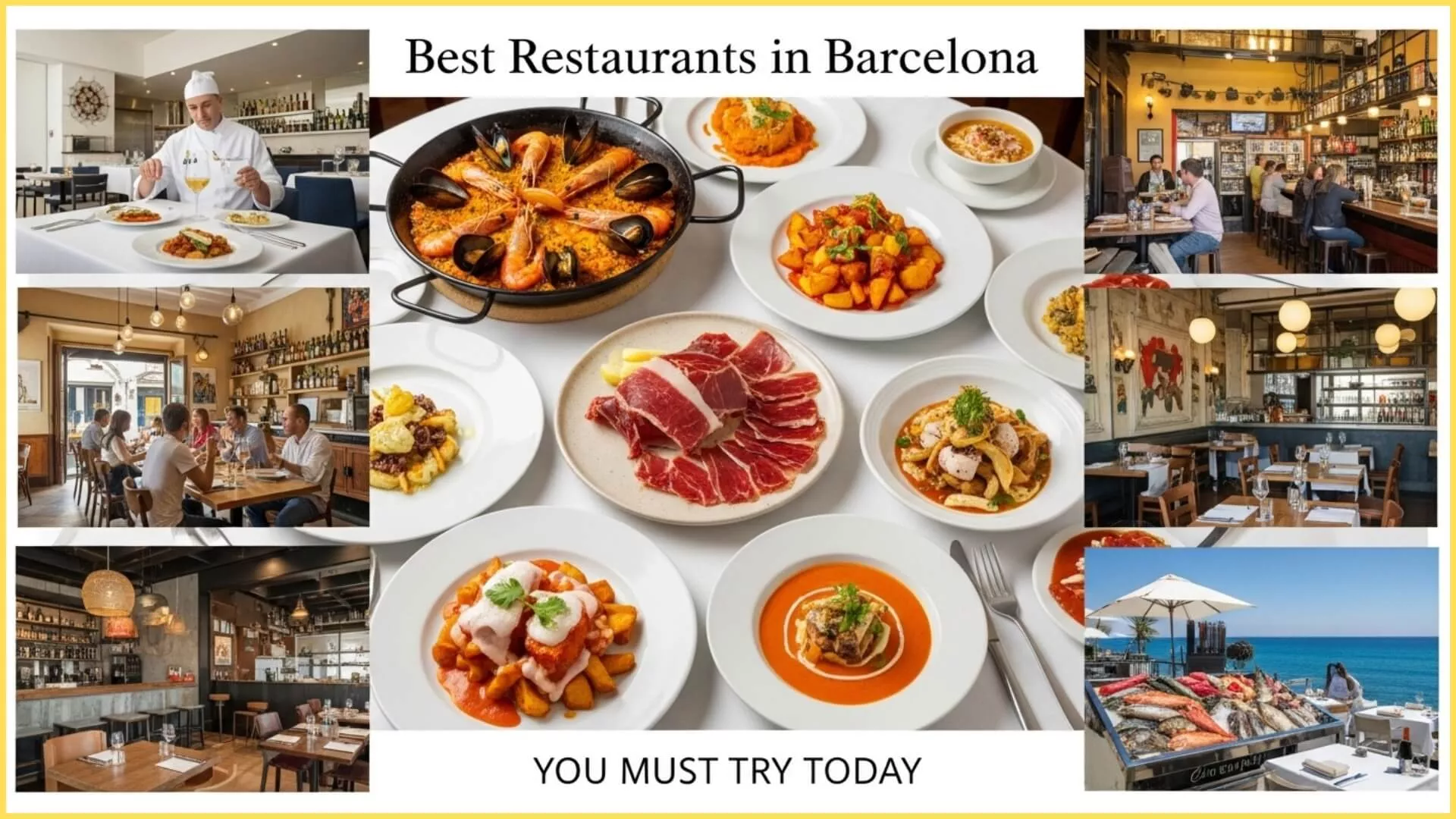
Best Restaurants in Barcelona You Must Try Today
Barcelona is one of those cities where eating well feels ridiculously easy. You can grab amazing tapas for around €5, then, if you’re in the mood to go all out, book a world-famous tasting menu the very same night. Fancy or casual, cheap or splurgey, this city does it all — and does it very well.
If you love food, Barcelona is kind of dangerous. In the best way.
Why Barcelona is such a great food city
Barcelona hits that sweet spot between old-school tradition and creative modern cooking. You’ve got classic Catalan dishes made the way they’ve been cooked for generations, loads of fresh seafood from the Mediterranean, excellent olive oil, and beautiful seasonal produce. Then on top of that, the city has this super exciting fine-dining scene where chefs are constantly doing wild, inventive things.
That mix is what makes eating here so fun. One minute you’re having a simple plate of patatas bravas at a noisy bar, and the next you’re sitting down to a tasting menu at one of the best restaurants in the world. Literally — Disfrutar was recently named the best restaurant in the world, and the 2026 Michelin Guide gave stars to 29 restaurants in Barcelona.
And it’s not just Spanish or Catalan food, either. Barcelona’s international restaurant scene is strong, so you can jump from farmhouse-style local cooking to Japanese omakase or live-fire modern cuisine without leaving the city center.
The main types of restaurants in Barcelona
Barcelona has a bit of everything, but most places fall into a few main categories.
Traditional Catalan restaurants are where you go for local comfort food — things like escudella, fricandó, botifarra, and escalivada. These places often do a great menú del día at lunchtime, which is usually one of the best-value meals you can get in the city.
Tapas bars are the obvious classic. This is where you order a few small plates, maybe stand at the bar, maybe squeeze into a tiny table, and slowly work your way through bravas, croquetas, anchovies, and montaditos. It’s casual, social, and honestly one of the best ways to eat in Barcelona.
Then there’s the fine-dining side of the city, which is a serious big deal. In the 2026 Michelin Guide, Barcelona has 4 three-star restaurants, 5 two-star spots, and 20 one-star places. So yes, if you want a fancy food trip, you’re in the right city.
And of course, there’s a huge mix of international food too. Ramen, ceviche, sushi, modern bistros, fusion spots — you’ll find all of it.
Best restaurants in Barcelona
Best for traditional Catalan food
If you want proper Catalan flavors, La Sosenga in the Gothic Quarter is a fantastic place to start. Time Out critics currently rank it as the number one restaurant in Barcelona, which is a pretty big flex. Even better, it offers a seven-course tasting menu for just €35, which is a kind of wild value. Expect very seasonal dishes with organic local produce, like stewed black trumpet mushrooms with Iberian pork jowl.
Bo de Bernat is another favorite if you want rich, comforting Catalan food. People rave about the slow-cooked pork cheeks and the fricandó croquettes, and à la carte dishes usually sit around €15–18.
Contracorrent, which has two locations, is also well worth a look. It has a loyal following thanks to top-quality seasonal ingredients and a lively open kitchen that adds to the experience.
Best tapas bars
For classic tapas-bar energy, Quimet & Quimet in Poble Sec is a must. It’s tiny, usually packed, and standing-room only, but that’s part of the charm. It’s famous for creative montaditos and excellent tinned seafood conservas. Very local, very iconic.
Bar Canyí is another top pick and was named Barcelona’s best tapas bar by Time Out in 2026. Locals love it because it keeps things simple and does them well — no nonsense, no touristy fluff, just good food.
If you want tapas with a fancier twist, Mont Bar in Eixample is the place. It was promoted to two Michelin stars in 2026 and is known for taking tapas-style dishes and turning them into something surprisingly elegant. Great if you want small plates, but make them a little extra.
Best fine-dining and Michelin-star restaurants
If you’re going big, Disfrutar is the headline act. It has three Michelin stars and was named the best restaurant in the world. The chefs — Mateu Casañas, Oriol Castro, and Eduard Xatruch — are known for playful, boundary-pushing tasting menus that are as creative as they are memorable.
Cocina Hermanos Torres is another three-star heavyweight, and it also has a Michelin Green Star for sustainability. It’s run by the Torres brothers, Sergio and Javier, and the restaurant itself is in a stunning former garage that’s been transformed into a huge open kitchen space.
Lasarte and ABaC are also part of Barcelona’s three-star club. Lasarte delivers a refined Basque-Catalan experience linked to Martín Berasategui, while ABaC is Jordi Cruz’s polished, creative take on Catalan fine dining.
A couple of restaurants made especially big moves in 2026. Enigma, Albert Adrià’s flagship, earned its second Michelin star, and so did Aleia, led by chef Paulo Airaudo. Mont Bar also joined the two-star category this year, and Cinc Sentits remains a standout for deeply personal Catalan flavors from chef Jordi Artal.
Best budget-friendly places
The good news is you do not need Michelin money to eat well in Barcelona.
Gat Blau is a great option for a cheap but thoughtful lunch. It serves an organic, creative menú del día for under €12, and a lot of the dishes are vegetarian. The menu changes daily, so it stays interesting.
Can Vilaró is more old-school and absolutely worth it if you like traditional, hearty food. Think tripe, salt cod, grilled liver, and actual proper fries — not the sad frozen kind. It’s a real working-class classic.
If you want something super affordable, Casa Estop offers generous handmade two-course meals for under €7, which honestly feels almost illegal in 2026. And at Plaça Tripi, Buen Bocata does homemade falafel for around €5.
Hidden gems
Some of the most memorable meals in Barcelona happen in smaller, less flashy places.
Berbena and Pompa, both by chef Carles Pérez de Rozas, are loved for their open kitchens and warm, intimate atmosphere. They feel a bit like being invited into someone’s home — if that someone happened to be an excellent cook.
Tercero Primera in Eixample is one of those places people get a little smug about discovering. It’s a cozy, apartment-style restaurant where chef Arianna serves comforting Catalan-Italian food to a small number of guests. You’ll want to book ahead.
Fonda Pepa in Gràcia is another gem, mixing Catalan and Mexican influences in a relaxed neighborhood setting. It’s the kind of place chefs go to on their day off, which is always a very good sign.
What to eat in Barcelona
You could happily spend days eating your way around the city, but if it’s your first time, there are a few things you really shouldn’t miss.
Patatas bravas: Fried potatoes with brava sauce or spicy aioli. An absolute tapas-bar essential.
Jamón ibérico: Rich, silky cured ham from acorn-fed pigs. Order it whenever you see it done properly.
Seafood paella: Best in Barceloneta, especially in places using fresh Mediterranean seafood.
Escalivada: Smoky roasted aubergine and red pepper, often served with bread or on pa amb tomàquet.
Croquetas: Crispy outside, creamy inside, usually filled with ham or salt cod.
Crema catalana: Basically Catalonia’s answer to crème brûlée — thinner, lighter, and scented with lemon and cinnamon.
Best areas for eating
Where you eat in Barcelona matters almost as much as what you eat.
The Gothic Quarter is packed with tapas bars and traditional restaurants. It’s one of the easiest areas to explore on foot, and the streets around Carrer de n’Amargós are especially good for authentic Catalan food.
El Born is stylish, lively, and full of cool bistros, wine bars, and chef-driven spots. Great if you want somewhere with a bit of buzz.
Example is the city’s serious food powerhouse. A huge number of Michelin-starred restaurants are here, including Disfrutar, Mont Bar, and Lasarte.
Barceloneta is where you go for seafood, black rice, and paella with a sea view. Yes, some places are touristy, but there are still very good meals to be had.
Gràcia has more of a neighborhood feel and generally fewer tourists. It’s a great area for relaxed, local dining, with places like Fonda Pepa and Tercero Primera standing out.
Tips for eating well in Barcelona
A few simple tips can save you money and help you avoid disappointing meals.
Avoid restaurants right on La Rambla. Most are overpriced and forgettable. Walk one street over and things get better fast.
Check recent reviews before sitting down. TripAdvisor and TheFork are both widely used, and recent 2025–2026 reviews are the most helpful.
Book Michelin-starred places well in advance. Disfrutar and ABaC often fill up weeks or even months ahead.
Eat on local time. Lunch is usually from 2–4 pm, and dinner rarely starts before 9 pm. Show up at 7 p,m and you’ll basically be announcing, “Hello, I am very much a tourist.”
Order the menú del día whenever you can. It’s usually the best-value meal in town, often including two or three courses and even wine for around €12–25.
Best times to visit for food
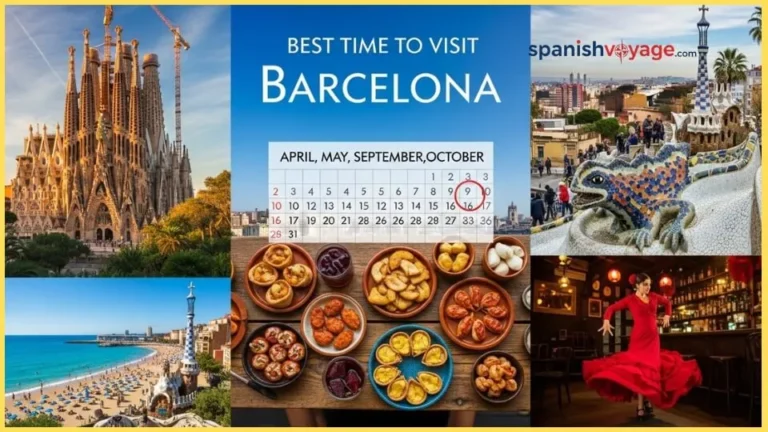
Spring, especially April to June, is a lovely time to eat in Barcelona. Markets are full of peak produce like asparagus, broad beans, and wild mushrooms, and menus feel extra fresh.
October and November are also fantastic if you’re into richer food. That’s when truffle and game season kicks in, and many of the city’s top restaurants really lean into it.
Food lovers should also keep an eye on Fira Alimentaria, Barcelona’s major food trade fair held every two years, as well as the city’s summer festes majors, where you can try local specialties in a more festive, street-food kind of setting.
FAQ
Do you need reservations?
For Michelin-starred restaurants, yes — definitely. Try to book at least 2–4 weeks ahead, and for places like Disfrutar, even earlier is smarter. For mid-range restaurants, same-day reservations through TheFork often work just fine.
Are restaurants expensive?
They can be, but they don’t have to be. A menú del día usually costs around €12–18, tapas often run €2–5 per dish, and Michelin tasting menus generally start around €150 and can go well beyond €300 per person.
Is tipping expected?
Not really in the American sense. Tipping isn’t required in Spain, but rounding up the bill or leaving €1–2 per person is appreciated at sit-down restaurants. If the service is exceptional at a fine-dining place, leaving around 5–10% is a nice gesture.
What time do locals eat?
Lunch is usually between 2 pm and 4 pm. Dinner is usually between 9 pm and 11 pm, and many locals won’t sit down for dinner until 9:30 pm or later.