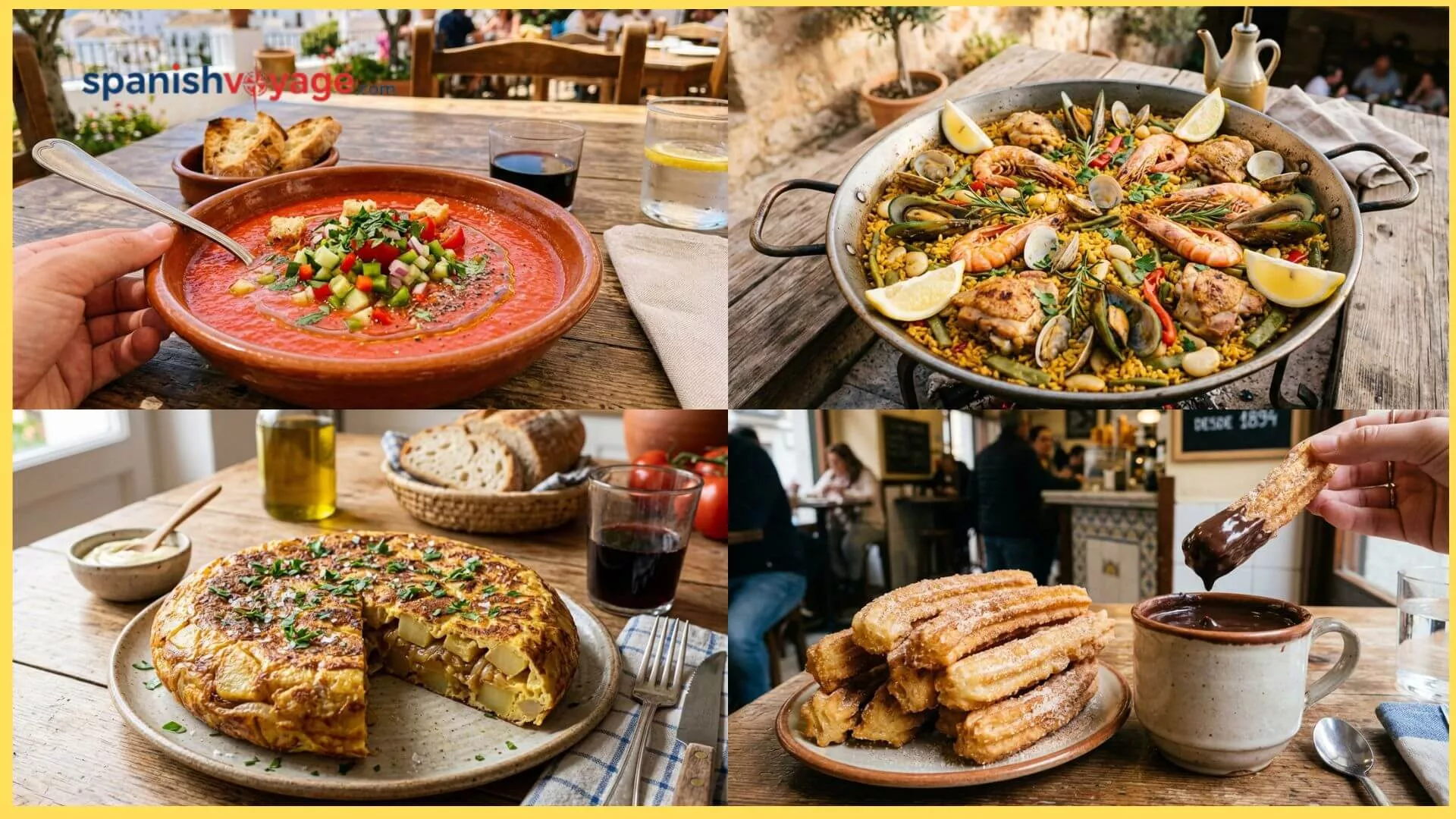
7 Famous Spanish Foods: Must-Try Cuisine Travel Guide
One of the best reasons to visit Spain is the food. Like, forget the monuments for a second (okay, don’t actually forget them), but the eating situation here is seriously next level. Every region does its own thing, and the flavors are just… chef’s kiss. Here’s a friendly rundown of 7 Spanish dishes you really can’t leave without trying.
Why Everyone Loves Spanish Food
Spanish food isn’t complicated or fussy — it’s just really, really good. Think fresh ingredients, olive oil on everything, and bold flavors that come from simple combinations of seafood, rice, veggies, and cured meats. Dishes like paella, gazpacho, and jamón ibérico are famous worldwide for a reason.
And the social side of eating here? Absolutely love it. Tapas culture means you order a bunch of little plates, share everything, and just… hang out. You’re not rushing anywhere. Spaniards take their meals seriously, and honestly, so should you.
1. Paella – The Classic You Already Know
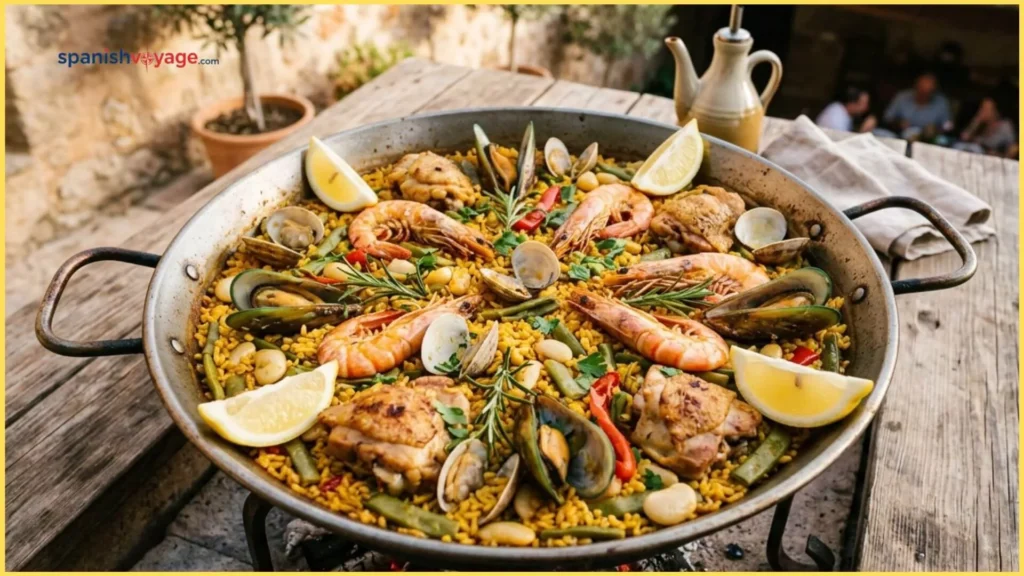
Paella is basically Spain’s most famous dish, and yes — it lives up to the hype. The OG version comes from Valencia and uses chicken, rabbit, green beans, and saffron-scented rice cooked in a wide, shallow pan. It’s earthy, fragrant, and nothing like the sad frozen version you might have tried back home.
Quick breakdown of the main types:
Valencian paella – the traditional one, with chicken and rabbit
Seafood paella – fish and shellfish lovers, this one’s for you
Vegetarian paella – all the saffron rice goodness, no meat needed
Pro tip: Go to Valencia if you want the real deal. The rice culture there is deep, and even the locals get passionate about whose paella is best.
2. Tapas – The Ultimate Way to Eat in Spain
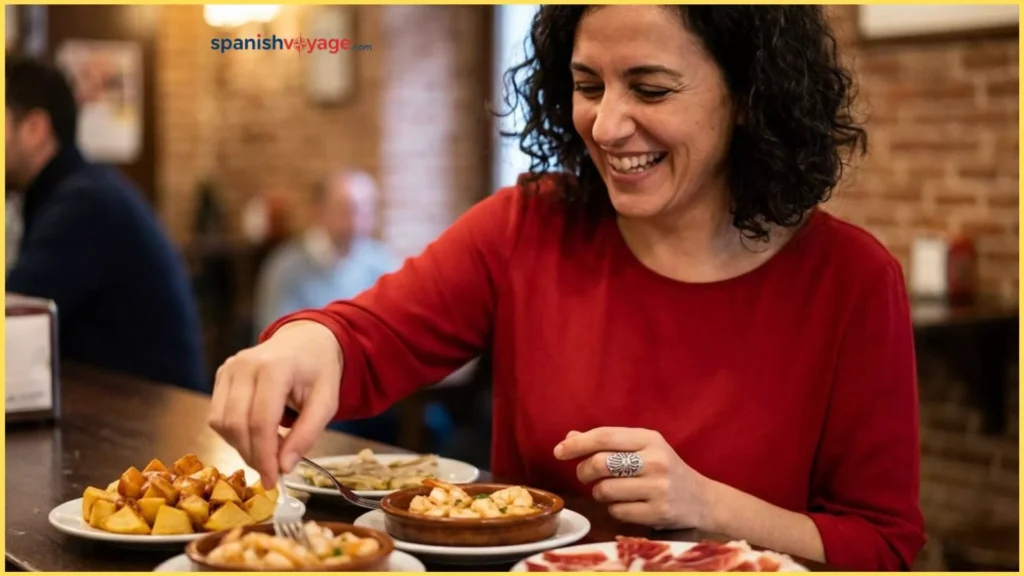
Tapas aren’t just food — they’re a whole vibe. Small plates, shared with friends, washed down with a cold drink. You order a few, chat, order a few more, maybe move to another bar. Dinner can literally last three hours, and nobody bats an eye.
The classics you’ll see everywhere:
Patatas bravas – crispy fried potatoes with a spicy or tangy sauce, always a crowd pleaser
Gambas al ajillo – garlic shrimp in olive oil, simple and absolutely delicious
Croquetas – creamy on the inside, crispy on the outside, dangerously addictive
The best part? You don’t have to commit to one restaurant. Bar-hop, try a little of everything, and eat like a local.
3. Jamón Ibérico – The Ham That Will Change Your Life
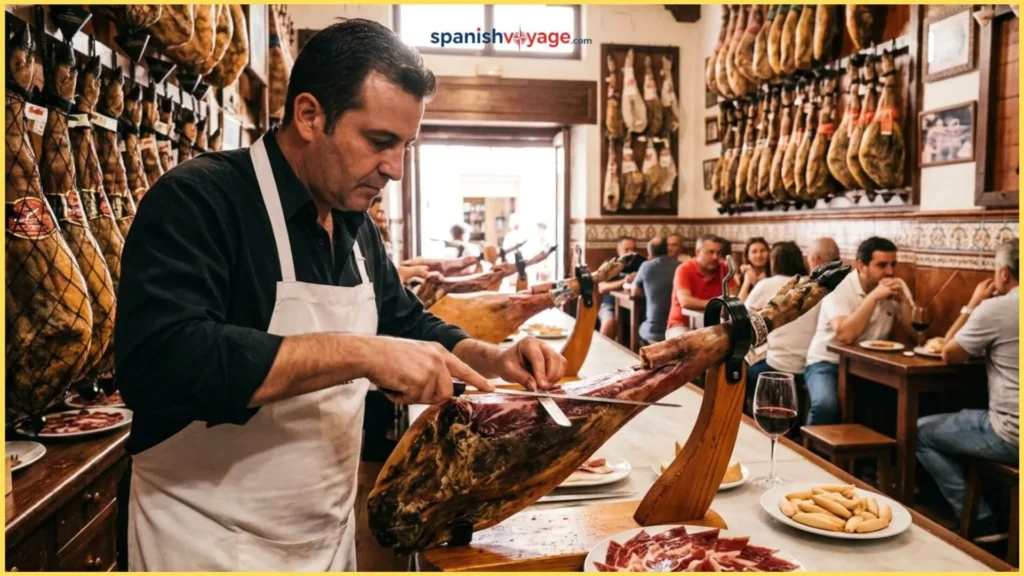
No joke, jamón ibérico might be the fanciest thing you’ll eat on your whole trip. It comes from Ibérico pigs (a special breed), it’s cured for months or even years, and the flavor is rich, nutty, and kind of melt-in-your-mouth good.
The big difference to know: Ibérico > Serrano. Serrano is still tasty, but ibérico is the premium stuff. Best enjoyed in thin slices on its own, or layered on some pan con tomate (tomato bread). Don’t overthink it — less is more with this one.
4. Tortilla Española
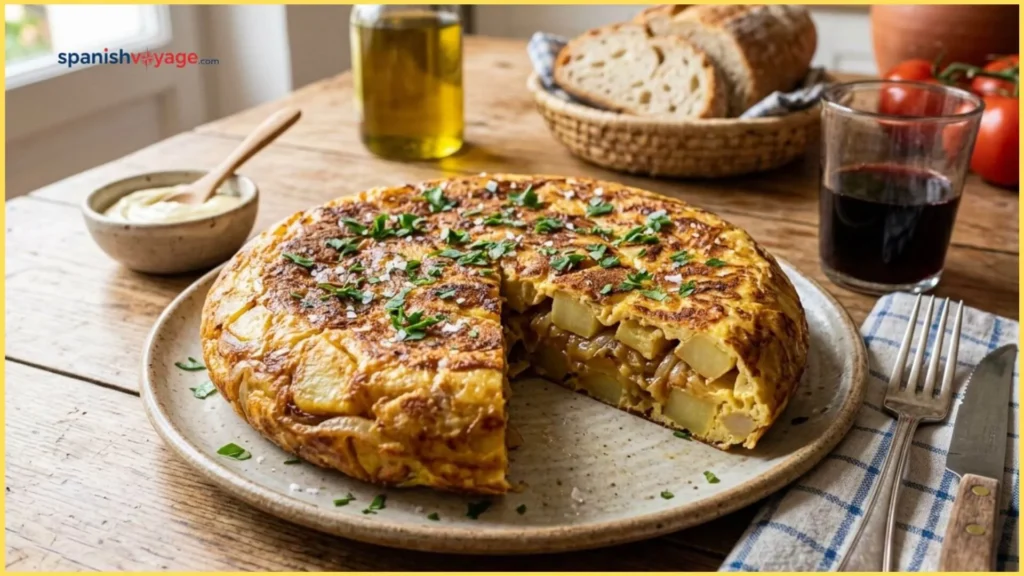
Don’t let the simple ingredients fool you. Tortilla española is just eggs, potatoes, and sometimes onion — but it’s one of the most beloved dishes in all of Spain. You’ll find it in homes, corner bars, bakeries, basically everywhere.
It works for breakfast, as a tapa, stuffed in a bread roll (bocadillo), or as a light lunch. It’s filling, it’s cheap, and it’s genuinely delicious. If you try nothing else on this list, try the tortilla.
5. Gazpacho – Cold Soup That Actually Slaps
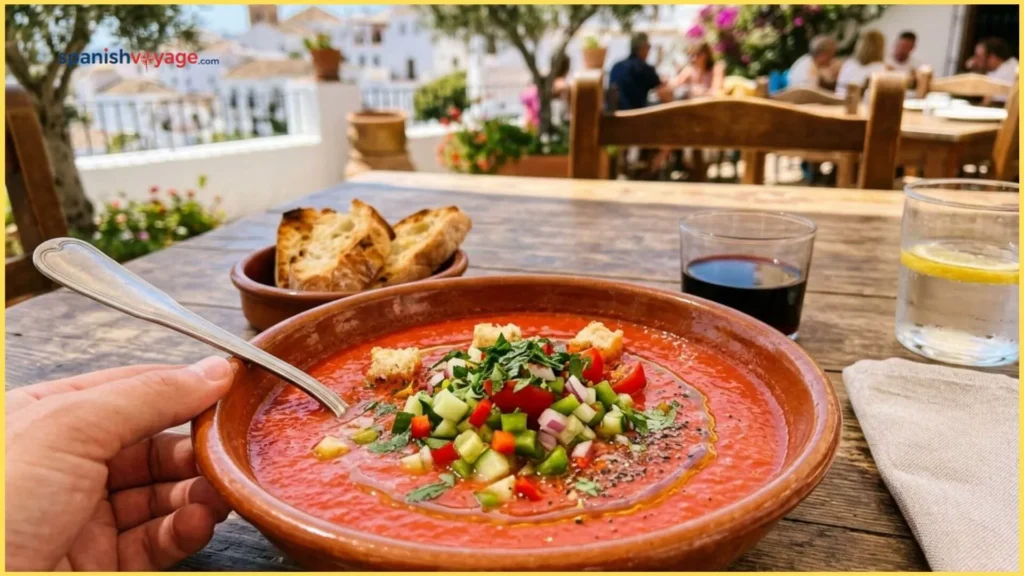
I know, I know — cold soup sounds weird. But trust the process. Gazpacho is an Andalusian classic made from blended fresh tomatoes, cucumber, pepper, garlic, and olive oil, all served chilled. On a hot summer day in Seville, it is exactly what you need.
It’s refreshing, light, and packed with flavor. Southern Spain’s summers are intense (we’re talking 40°C kind of intense), so cold dishes like this make total sense. Sip it like a drink or eat it as a starter — either way, it works.
6. Churros con Chocolate
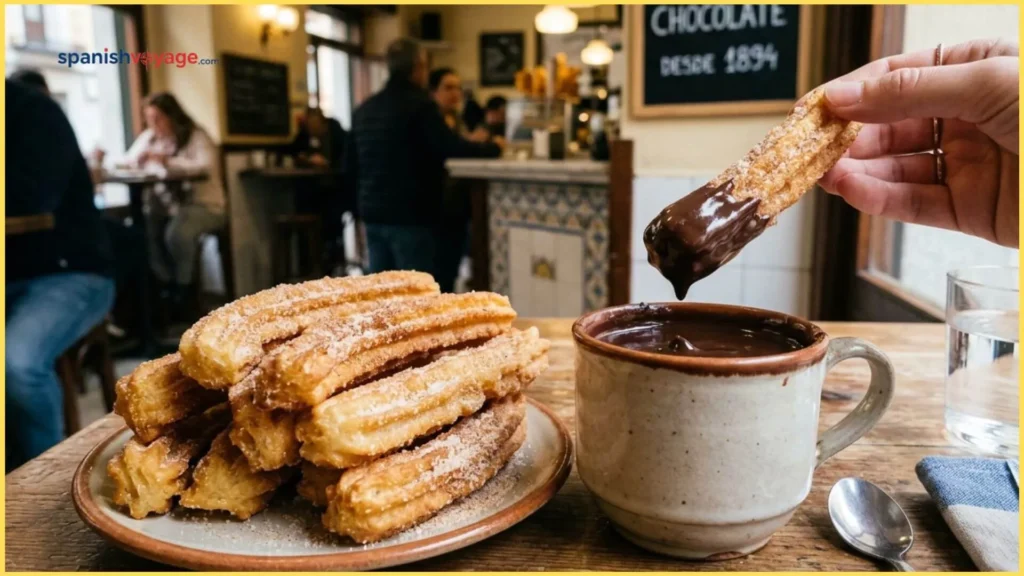
Okay, this one is just pure joy. Churros in Spain are simpler than the fancy-topped versions you see elsewhere — they’re just crispy fried dough sticks, and you dip them into a cup of thick, rich hot chocolate. That’s it. That’s the whole deal. And it’s amazing.
They’re classic for breakfast, but also a popular late-night snack after a big night out. You’ll find great churrerías in Madrid and Barcelona, but honestly, some of the best spots are the old neighborhood cafés that have been doing it the same way for decades.
7. Pulpo a la Gallega – Seafood at Its Finest
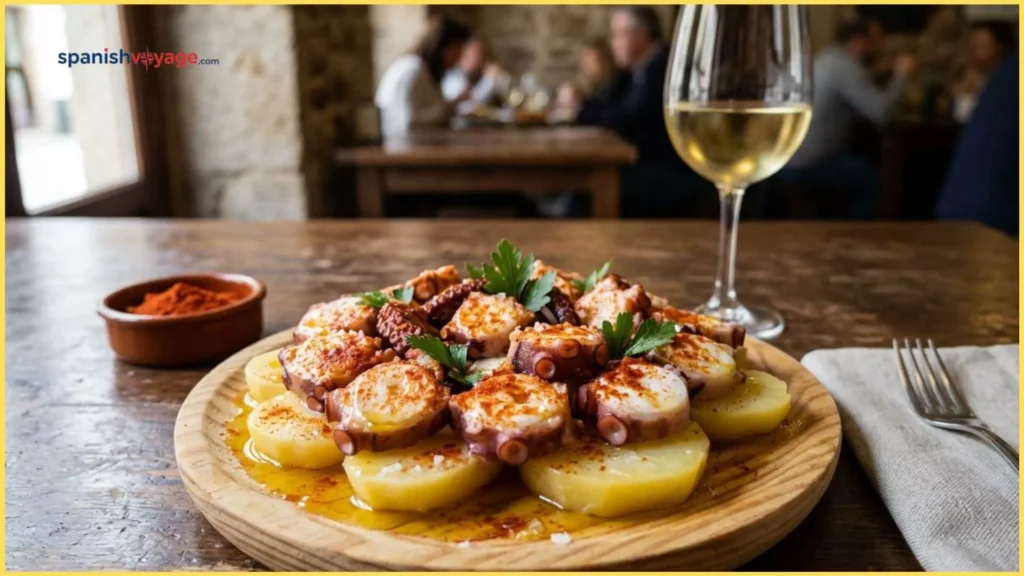
If you make it up to Galicia (northwest Spain — think dramatic coastline and green hills), you have to try pulpo a la gallega. It’s octopus, boiled until perfectly tender, sliced up, drizzled with olive oil, and dusted with smoky paprika. Served on a wooden board, usually with some potatoes on the side.
It sounds simple because it is simple — and that’s exactly the point. Galician seafood is so fresh that it doesn’t need much help. This dish is rustic, elegant, and honestly unforgettable.
Other Regional Foods Worth Exploring
Spain has so much more beyond these seven:
Basque Country – pintxos (think fancy tapas on bread) and incredible steaks
Catalonia – pa amb tomàquet, crema catalana, and escalivada
Andalusia – beyond gazpacho, the fried seafood is outstanding
Valencia – the rice culture runs deep, don’t stop at paella
A trip through San Sebastián, Seville, Barcelona, and Valencia will genuinely feel like four different culinary adventures in one country.
A Few Tips So You Don’t Eat at the Wrong Time
Meal times are later than you think. Like, much later. Lunch is the big meal of the day and usually happens between 2 and 4 PM. Dinner? Don’t show up before 9 PM unless you want an empty restaurant and sad looks from the staff.
Share everything. That’s how it works here. Order a few tapas at a time, see what you like, and keep going.
Hit a local market. Places like La Boqueria in Barcelona or Mercado Central in Valencia are perfect for tasting regional produce, cured meats, cheeses, and olives in one spot. Way more fun than a regular restaurant stop.
FAQ
What’s the most famous food in Spain? Paella — it’s basically the national symbol of Spanish cuisine.
Is Spanish food spicy? Not really! The flavor comes from olive oil, garlic, saffron, and fresh ingredients — not heat. A few dishes have a mild kick, but nothing crazy.
Are tapas free? Sometimes, in some cities (like Granada, they’re famously generous), but usually you pay for them. Worth every cent though.
What’s Spain’s national dish? Officially, there isn’t one, but everyone agrees paella holds the crown.